
1. The Godfather (1972)
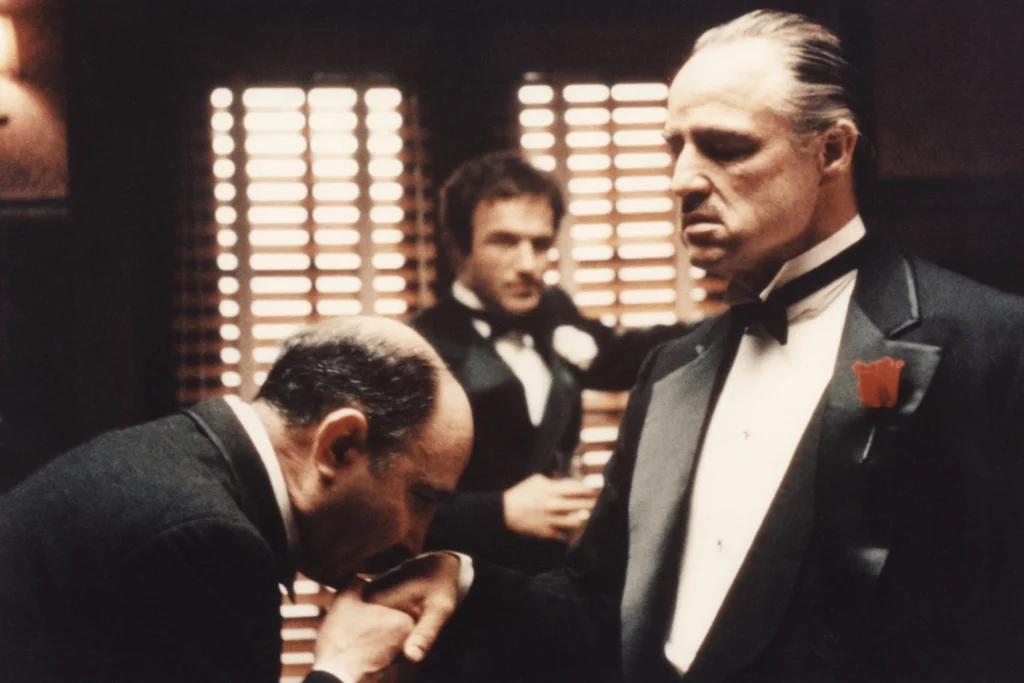
In the early months of 1972, you couldn’t walk down a city block without seeing someone wearing a button that featured the iconic “puppeteer” logo. It wasn’t just a movie; it was a cultural takeover that redefined the American gangster as a tragic, Shakespearean figure. People stood in lines that wrapped around several blocks, often waiting in the cold just to get a ticket for the next available showing. It was one of the first times a film felt like a true “must-see” event for every demographic, from teenagers to grandparents.
The atmosphere inside the theaters was reportedly electric, with audiences sitting in stunned silence during the more brutal sequences. Word of mouth traveled like wildfire, focusing on Marlon Brando’s transformative performance and the chilling tension of the restaurant scene. This was the moment cinema transitioned into the era of the “blockbuster” before the term was even widely used. It proved that a three-hour drama could dominate the box office and become a shared national experience. Even if you hadn’t seen it yet, you were already quoting the “offer he can’t refuse.”
2. The Exorcist (1973)
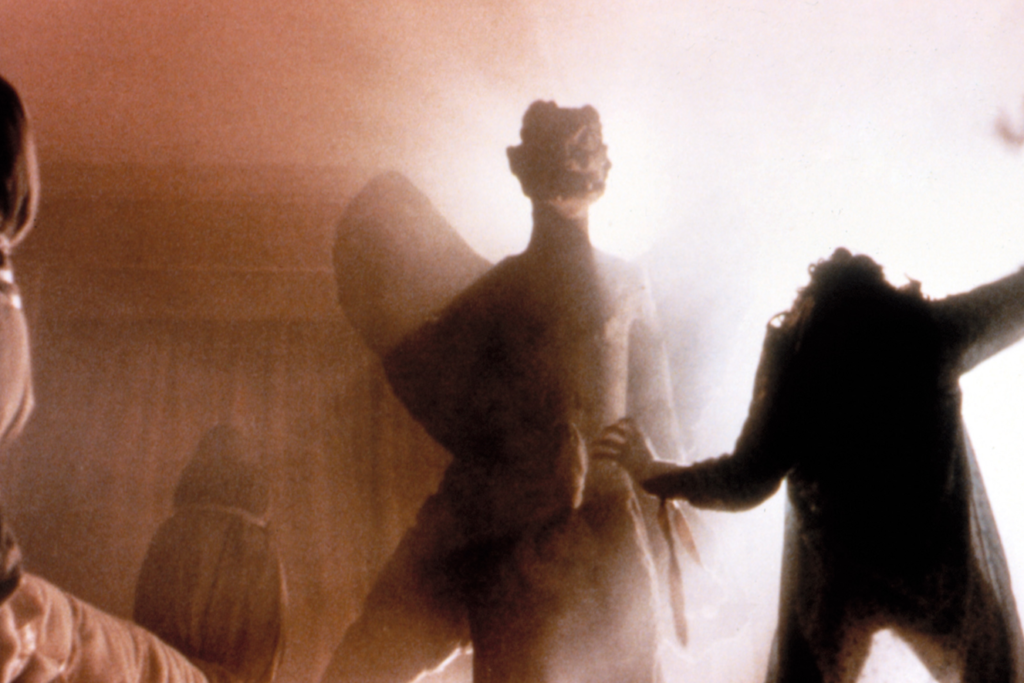
Nothing in the history of horror has ever matched the pure, visceral hysteria that greeted the release of The Exorcist. When it hit theaters during the Christmas season of 1973, it became a literal test of endurance for the public. Local news stations ran segments showing ambulances parked outside cinemas because audience members were fainting or fleeing in genuine terror. There were reports of people vomiting in the aisles, yet the lines to get in only grew longer as the notoriety increased. It felt like you were stepping into a forbidden ritual rather than a standard movie screening.
The cultural impact was so profound that it sparked heated debates among religious leaders and psychologists alike. You weren’t just going to see a scary story; you were participating in a massive, collective confrontation with the concept of evil. People talked about the “curse” of the production and shared stories of strange occurrences in their own homes after watching it. It was a rare instance where a film actually felt dangerous to consume. Decades later, it’s hard to replicate that sense of genuine, widespread panic that turned a horror film into a front-page news event.
3. Jaws (1975)
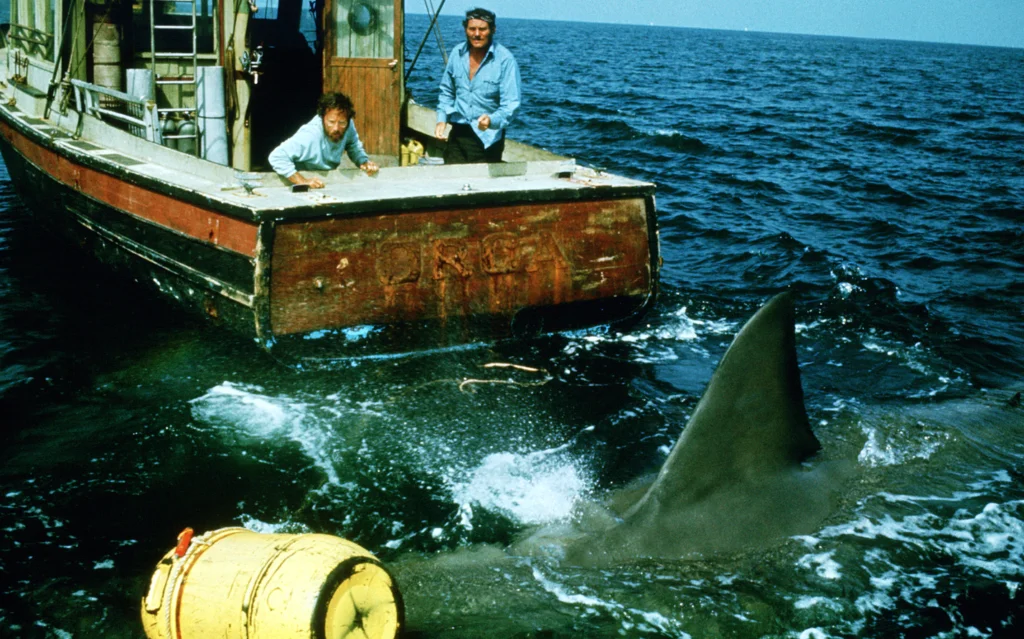
The summer of 1975 changed the way we look at the ocean forever, all thanks to a mechanical shark named Bruce. Before Jaws, movies didn’t usually open wide across the country simultaneously, but Steven Spielberg’s thriller broke all the rules. It turned the beach-going experience into a source of universal anxiety, making everyone second-guess a dip in the surf. The simple, rhythmic two-note theme became a shorthand for impending doom that everyone recognized instantly. It was the birth of the modern summer blockbuster, designed to be a high-octane spectacle.
If you lived through that summer, you remember the sheer ubiquity of the merchandising and the endless “Jawsmania.” People didn’t just see it once; they went back five or six times, dragging friends along to see them jump at the head popping out of the boat. It was a communal scream-fest that rewarded the audience for their patience and their fear. The film became a permanent part of the collective psyche, proving that a movie could be a seasonal phenomenon. It’s the reason why, to this day, a lot of people still feel a slight chill when they can’t see their feet in the water.
4. Star Wars (1977)
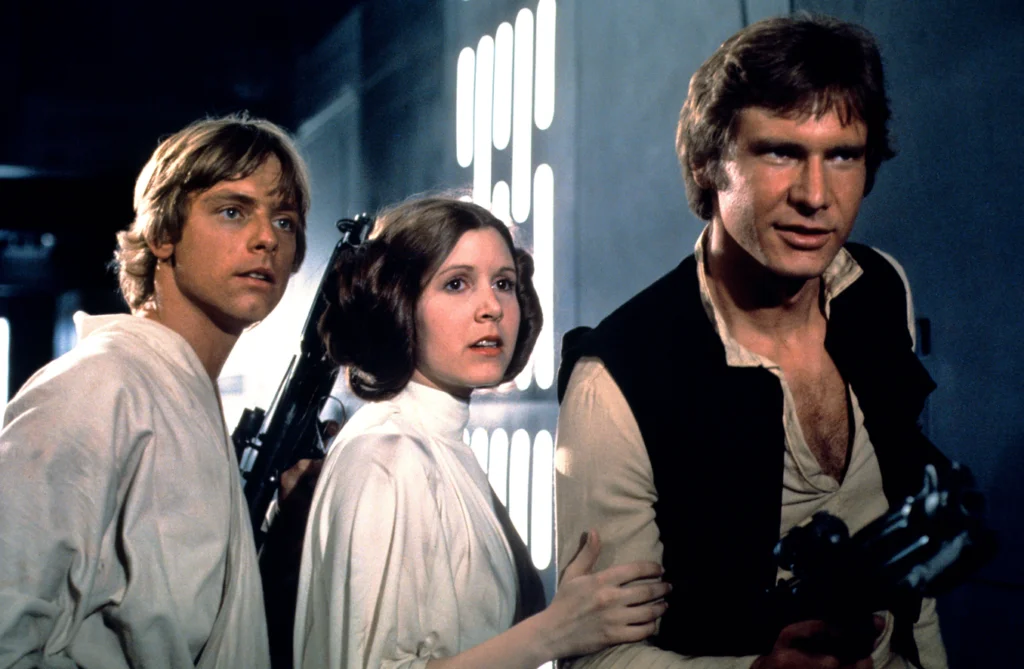
When Star Wars opened in May 1977, nobody—not even George Lucas—expected it to rewrite the DNA of popular culture. It started in a limited number of theaters, but the sheer force of its imagination caused an immediate, unprecedented explosion of interest. Fans weren’t just watching a movie; they were emigrating to a different galaxy for two hours. For many, it was the first time they had seen special effects that felt truly seamless and immersive. It felt like a revitalizing shot of optimism after a decade of gritty, cynical cinema.
The lines for Star Wars became legendary, with some people essentially living on the sidewalk to ensure they got a seat for the next showing. It was an era where you couldn’t just look up spoilers online, so every twist and every alien design was a genuine, shared surprise. Kids and adults alike were captivated by the lightsabers and the Force, turning the film into a secular religion overnight. The toy aisles were soon emptied, and the characters became more famous than most real-world politicians. It remains the gold standard for a movie that isn’t just a hit, but a total cultural shift.
5. Close Encounters of the Third Kind (1977)
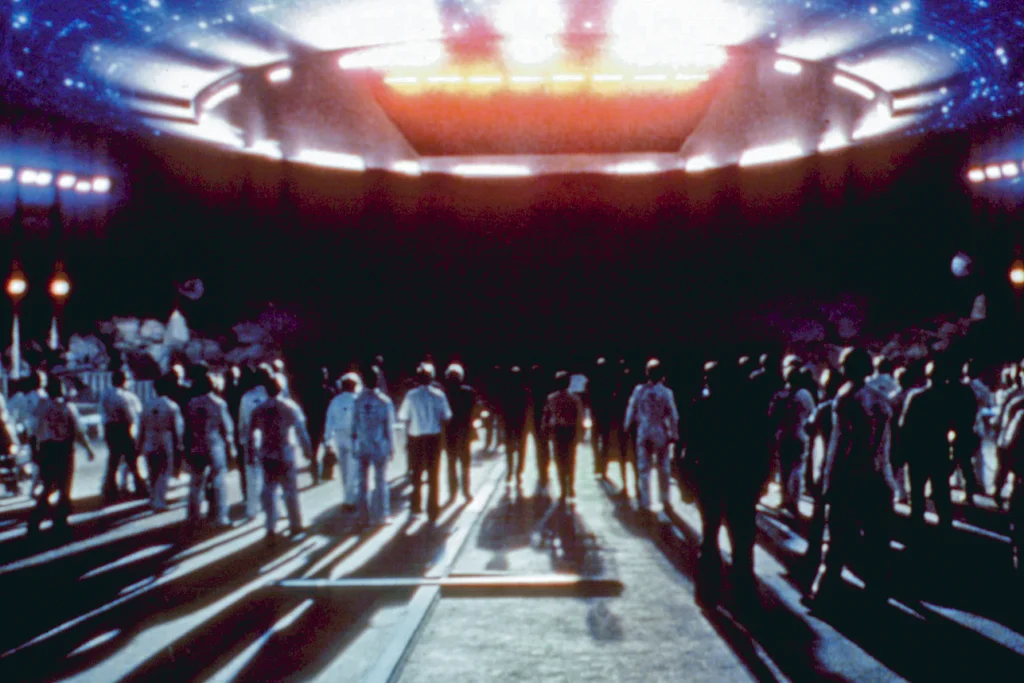
Coming hot on the heels of the space-opera craze, Spielberg returned to dominate the late 1970s with a very different kind of celestial event. Close Encounters of the Third Kind felt like a more intellectual, grounded companion to the fantasy of Star Wars, and the anticipation was sky-high. People were fascinated by the idea that we might not be alone, and the film leaned into that mystery with incredible tension. The five-note musical motif became a global language that everyone seemed to be humming or whistling. It transformed the concept of “UFOs” from tabloid fodder into a majestic, cinematic wonder.
The climax at Devil’s Tower was a visual feast that left audiences in absolute awe, feeling as though they had witnessed a real historical event. It was the kind of movie that prompted deep conversations about the universe and our place within it on the car ride home. The scale of the production was massive, and it felt like a technical marvel that pushed the boundaries of what was possible on screen. Even the marketing, with its tagline “Watch the Skies,” created a sense of real-world urgency. It successfully turned a sci-fi premise into a profound, almost spiritual experience for the masses.
6. Saturday Night Fever (1977)
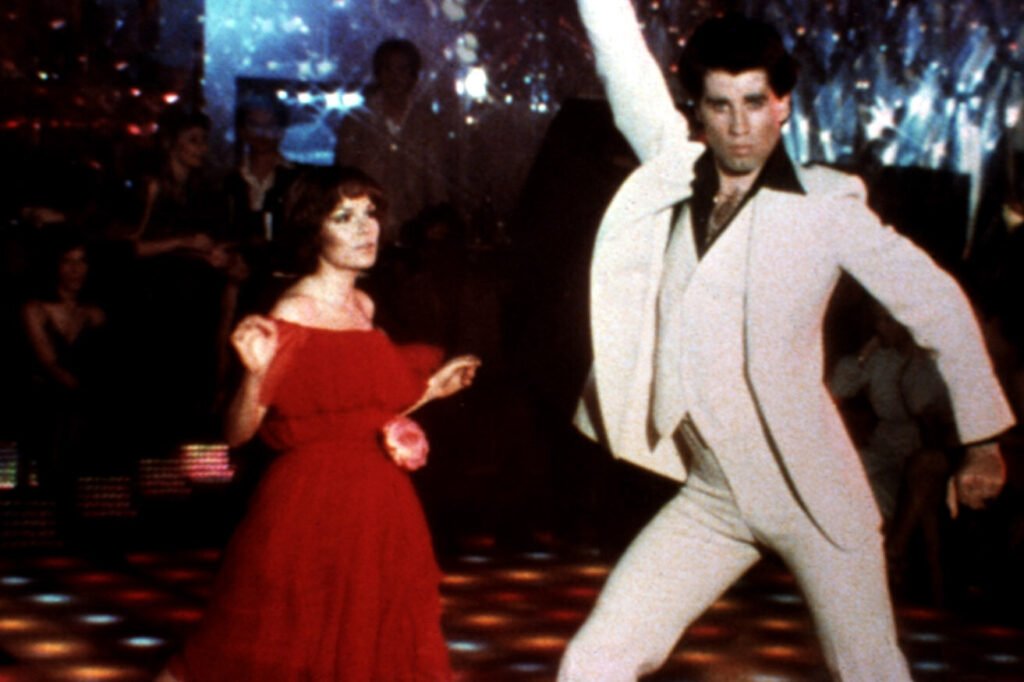
In 1977, disco wasn’t just a genre of music; it was a lifestyle, and this film served as its definitive manifesto. When John Travolta strutted down the street in the opening credits of Saturday Night Fever, he wasn’t just playing a character—he was launching a global trend. The movie captured a specific kind of urban energy and longing that resonated deeply with young people everywhere. Suddenly, every suburban kid wanted a white suit and a pair of dancing shoes. It took a niche subculture from Brooklyn and made it the center of the universe for a couple of years.
The soundtrack by the Bee Gees was playing on every radio station, creating a feedback loop that kept the movie at the forefront of the conversation. You couldn’t escape the beat, and you couldn’t escape the image of Travolta on the lighted dance floor. It felt like an “event” because it dictated the fashion, the music, and the nightlife of the era. The film was surprisingly gritty and dark, which added a layer of authenticity that many didn’t expect from a “dance movie.” It remains a perfect time capsule of a moment when the world briefly caught disco fever.
7. Grease (1978)
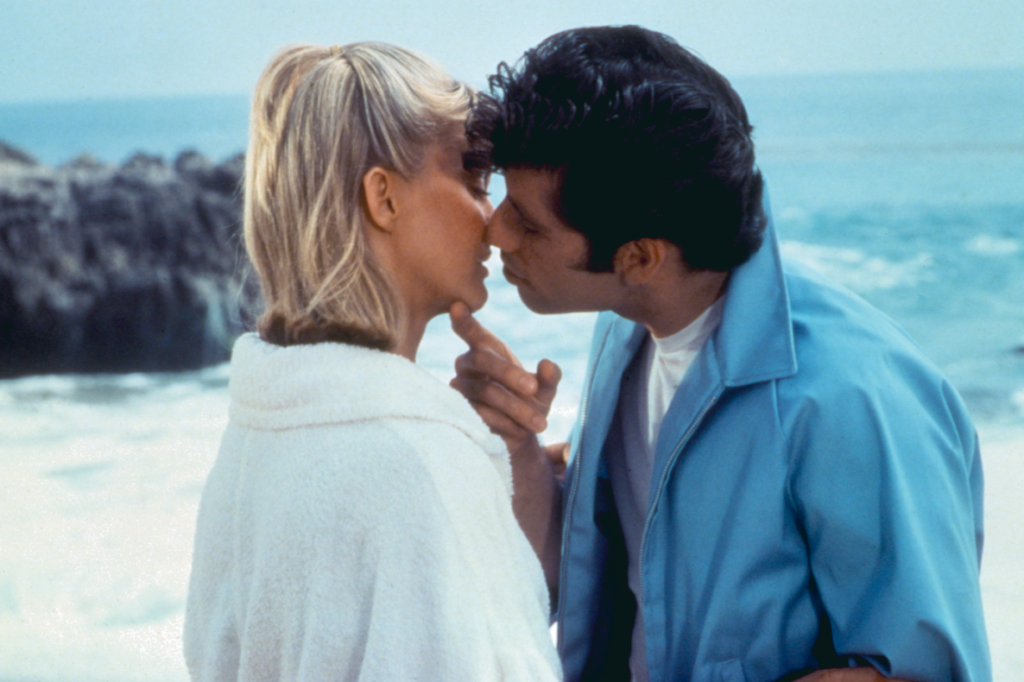
By the time Grease arrived in the summer of 1978, the 1950s nostalgia wave was at its absolute peak, and this movie was the crowning achievement. It was a massive, neon-colored party that invited everyone to sing along to a soundtrack they already felt they knew. Olivia Newton-John and John Travolta had a chemistry that felt like lightning in a bottle, and the public couldn’t get enough of them. It was a lighter, more joyful event compared to the heaviness of earlier 70s hits. The film felt like an escape into a stylized, idealized past where every problem could be solved with a high-energy dance number.
The theater experience for Grease was often described as being more like a concert than a traditional movie screening. People were dancing in the aisles and singing the lyrics at the top of their lungs, creating a festive atmosphere that was hard to resist. It dominated the radio for months, with “You’re the One That I Want” becoming an inescapable anthem. The film appealed to every generation, from those who lived through the 50s to kids who just loved the catchy tunes. It proved that the musical was far from dead; it just needed a bit of leather and hairspray to feel modern again.
8. Superman: The Movie (1978)
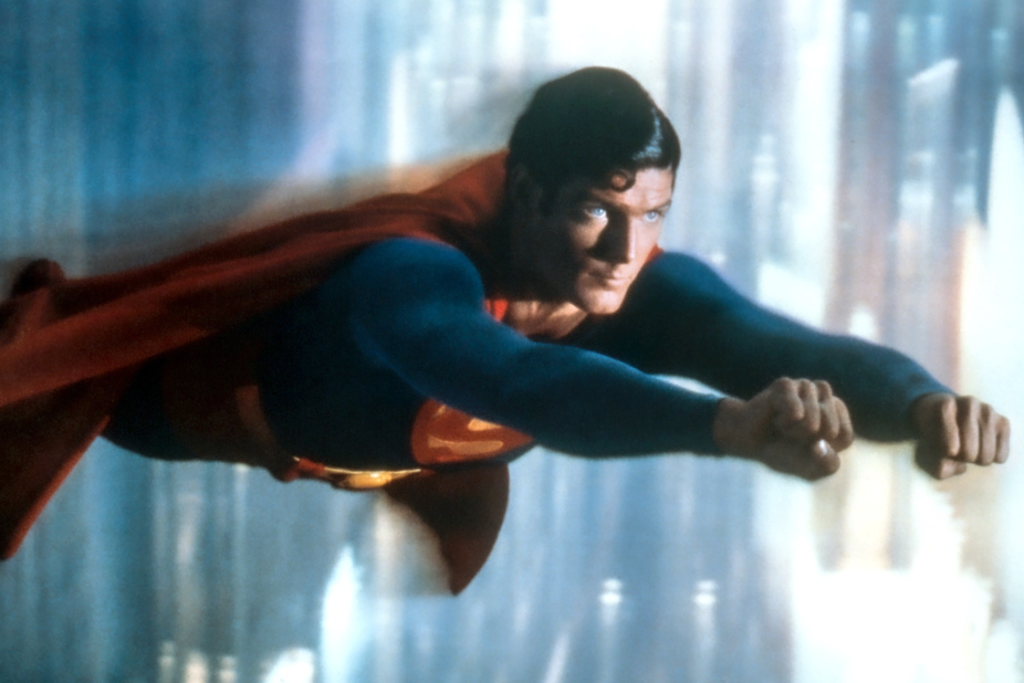
“You will believe a man can fly” was the tagline that defined the winter of 1978, and the film actually lived up to the hype. Before Superman: The Movie, superhero movies were often seen as campy or low-budget, but this production changed the game by treating the source material with total sincerity. Seeing Christopher Reeve take flight in the blue and red suit was a genuine “how did they do that?” moment for audiences. It felt like a monumental achievement in filmmaking, blending epic scale with a truly heartwarming performance. The swelling John Williams score only added to the feeling that you were witnessing something legendary.
The release felt like a global celebration of a classic American icon, and it drew in massive crowds who wanted to see their childhood hero come to life. It set the blueprint for every superhero movie that followed, establishing that these stories could be prestigious and emotionally resonant. People left the theater feeling a sense of wonder and hope that was often missing from the gritty cinema of the decade. It wasn’t just a movie; it was the birth of the modern superhero blockbuster. It felt like a definitive moment where technology finally caught up to the human imagination.
9. Alien (1979)
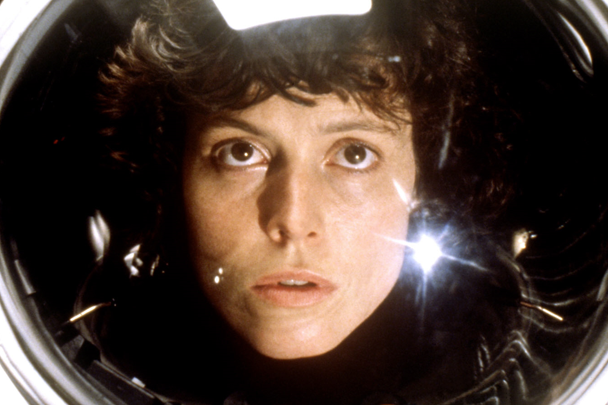
As the decade drew to a close, Ridley Scott decided to turn the “excitement of space” into a claustrophobic nightmare. Alien was marketed with a mysterious trailer that showed an egg cracking and the haunting tagline, “In space, no one can hear you scream.” The anticipation was built on a foundation of dread and curiosity, as people wondered what kind of monster could be so terrifying. When the film finally landed, the “chestburster” scene became an instant piece of cinematic folklore. People were talking about it at work, in schools, and at dinner tables, often with a mix of shock and admiration.
The film felt like a major event because it subverted the bright, hopeful sci-fi tropes that Star Wars had popularized just two years prior. It was industrial, dirty, and genuinely horrifying, introducing a “haunted house in space” concept that felt entirely fresh. Sigourney Weaver’s Ellen Ripley became an immediate icon of strength, providing a new kind of hero for a new era. The creature design by H.R. Giger was unlike anything audiences had ever seen, looking truly extraterrestrial and disturbing. It left a lasting mark on the genre, proving that space could be a place of unimaginable terror.
10. Apocalypse Now (1979)
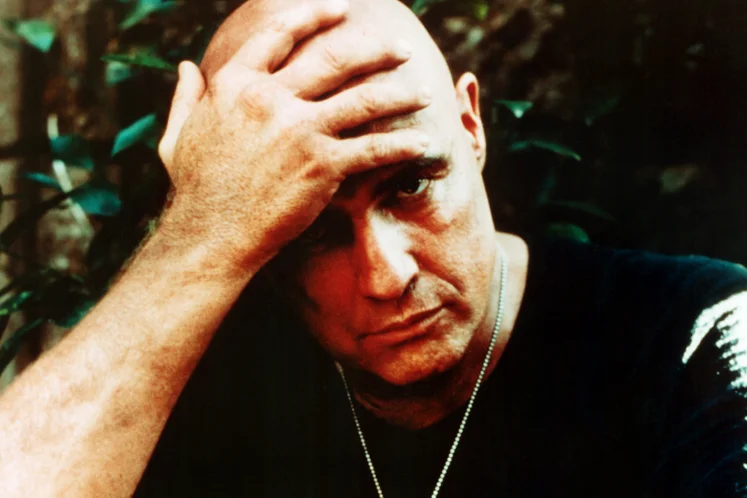
The production of Apocalypse Now was such a chaotic, well-documented disaster that by the time it finally hit theaters, it felt like a miracle. Francis Ford Coppola had poured his own soul and fortune into the project, and the public was desperate to see if it was a masterpiece or a train wreck. It was an “event” born out of sheer curiosity and the legendary status of its troubled shoot in the Philippines. When those first helicopters appeared on screen to the sound of “The End” by The Doors, the audience knew they were in for something massive. It felt less like a movie and more like a fever dream committed to celluloid.
The sheer scale of the cinematography and the haunting, psychedelic portrayal of war made it a polarizing but essential viewing experience. People debated the ending, the performance of Marlon Brando, and the film’s philosophical weight for months afterward. It was a heavy, demanding piece of art that commanded the attention of the entire world. Seeing Apocalypse Now on a big screen with a state-of-the-art sound system was considered a rite of passage for film lovers. It capped off the 1970s by pushing the limits of what a director could achieve within the studio system.
11. Rocky (1976)
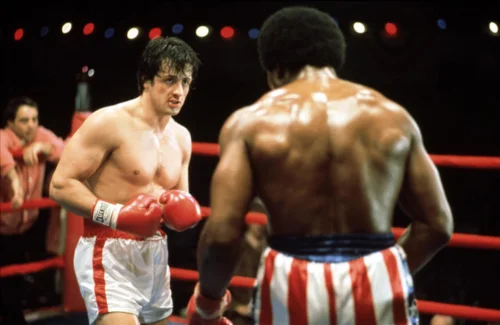
Rocky was the ultimate underdog story that mirrored the real-life rise of its creator and star, Sylvester Stallone. It came out of nowhere to become a massive sleeper hit, eventually growing into a cultural phenomenon that defined the bicentennial year. Everyone felt a personal connection to the character of Rocky Balboa, the “everyman” who just wanted to go the distance. The training montage and the run up the steps of the Philadelphia Museum of Art became instant shorthand for perseverance. It was the kind of movie that made audiences stand up and cheer at the screen, a rare feat in any era.
The film’s success felt like a collective victory for the audience, especially in a decade that had been marked by political scandal and economic struggle. It provided a much-needed sense of triumph and heart that resonated across all social classes. People weren’t just watching a boxing match; they were rooting for the human spirit to overcome the odds. The theme music became an anthem for anyone trying to achieve a dream, played at sporting events and graduations for decades to come. It turned Stallone into a global superstar and launched one of the most enduring franchises in history.
12. The Rocky Horror Picture Show (1975)
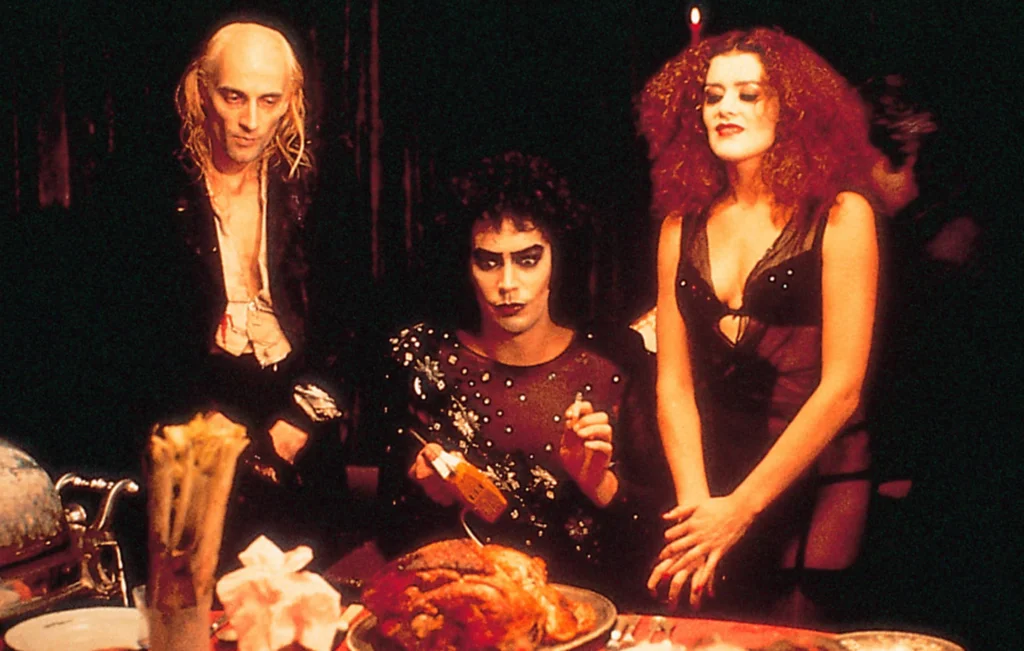
While many event movies are defined by their opening weekend, The Rocky Horror Picture Show is a unique case of a film that became an event after its initial release. It famously flopped at first, but it soon transformed into a midnight screening phenomenon that redefined the “cult movie.” By the late 70s, going to see The Rocky Horror Picture Show was a full-blown theatrical experience involving costumes, props, and shouting lines at the screen. It wasn’t just a movie you watched; it was a community you joined. It felt like a secret club that was slowly taking over every major city.
The “event” aspect was driven entirely by the fans, who turned the screenings into a sanctuary for the weird and the wonderful. If you went to a midnight show, you were likely to be pelted with rice or find yourself doing the “Time Warp” in the aisles with a group of strangers. It was a participatory experience that broke the fourth wall in a way that had never been done before. It represented a counter-culture explosion that allowed people to express themselves freely under the cover of night. Even today, it remains the ultimate example of a film that is an event every single time it plays.