
1. Wood Panel Tool Bench
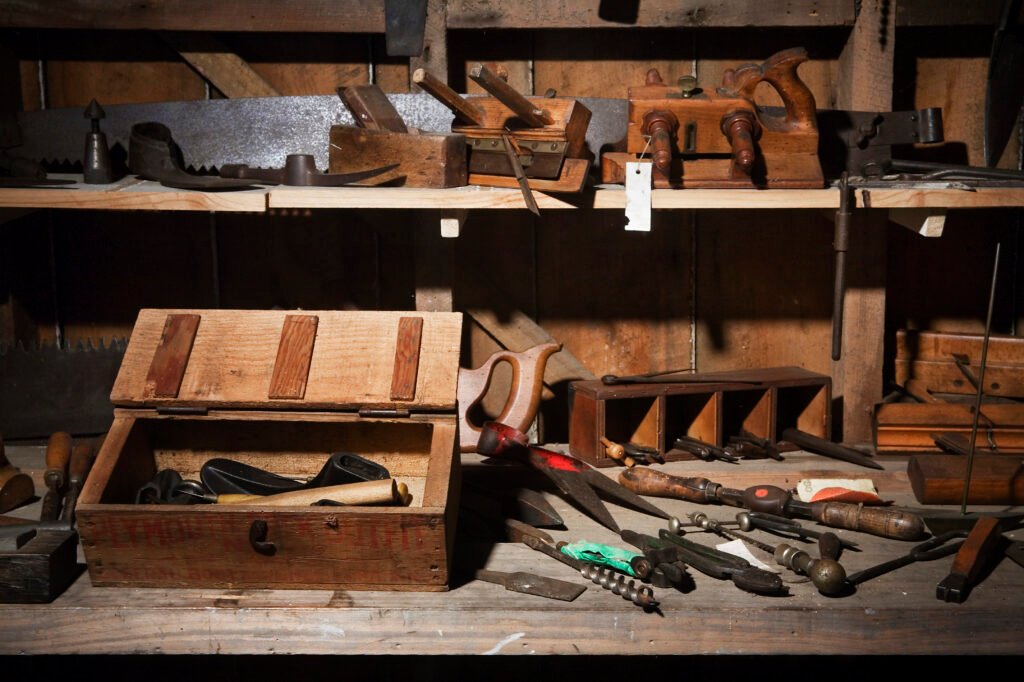
Almost every basement or garage seemed to have a sturdy wooden workbench tucked against the wall. It was usually homemade, built from thick boards and reinforced with nails that had been hammered in decades earlier. The surface was never perfectly clean, and it often carried stains from oil, paint, or mysterious household projects. Coffee cans filled with screws, nails, and bolts sat along the back edge like tiny storage bins. Even if nobody in the house was particularly handy, the workbench still stood there ready for some future repair. It gave the space a sense of purpose, like something useful might happen at any moment.
The drawers underneath often held a strange assortment of tools and leftover parts from projects long forgotten. You might find sandpaper, loose hinges, old measuring tapes, or a screwdriver with a worn plastic handle. Kids were usually told not to touch anything there, which made the area feel even more intriguing. The bench became the unofficial headquarters for fixing broken lamps, tightening chair legs, or assembling something new. Over time it quietly collected the history of every small household repair.
2. Metal Folding Chairs
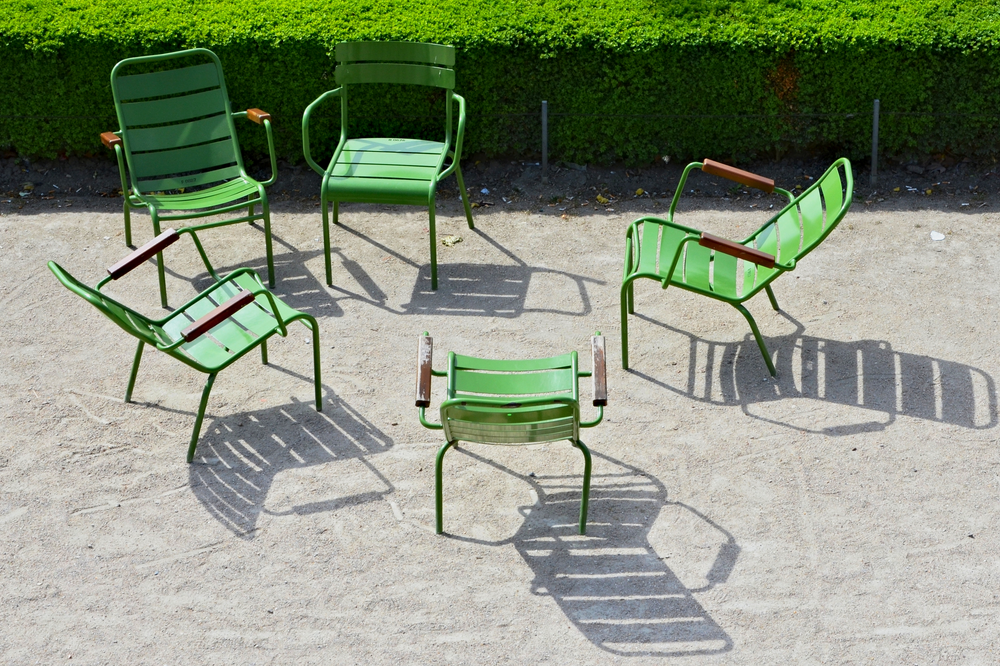
Those lightweight metal folding chairs seemed to multiply in basements during the ’70s. They were usually stacked against a wall or hanging from hooks, ready for holidays, card games, or surprise guests. The seats were often covered in vinyl with patterns that felt very of the era. When you unfolded one, it made that familiar clacking sound that echoed through the room. They were practical, easy to store, and always part of family gatherings.
During birthday parties or neighborhood get-togethers, those chairs would suddenly appear around folding tables. Afterward they went right back to their quiet corner in the basement or garage. Some developed wobbly legs or chipped paint, but nobody rushed to replace them. They were simply part of the household toolkit for hosting people. Even today, spotting one instantly brings back memories of crowded family celebrations.
3. Old Coffee Cans Full of Nails

Before plastic organizers took over, empty coffee cans became the default storage system for hardware. Basements and garages were full of them, usually labeled in marker or not labeled at all. Inside you would find nails, screws, washers, and bolts all rattling together. Opening one always produced that unmistakable metallic clink. It felt like digging through a miniature treasure chest of building supplies.
The cans themselves often came from brands families bought every week at the grocery store. Once the coffee was gone, the container got a second life in the workshop. Kids sometimes shook them just to hear the noise inside. When someone needed a nail for a quick repair, the search began inside one of those tins. Somehow they always held exactly what was needed, even if it took a little digging.
4. Tangled Extension Cords
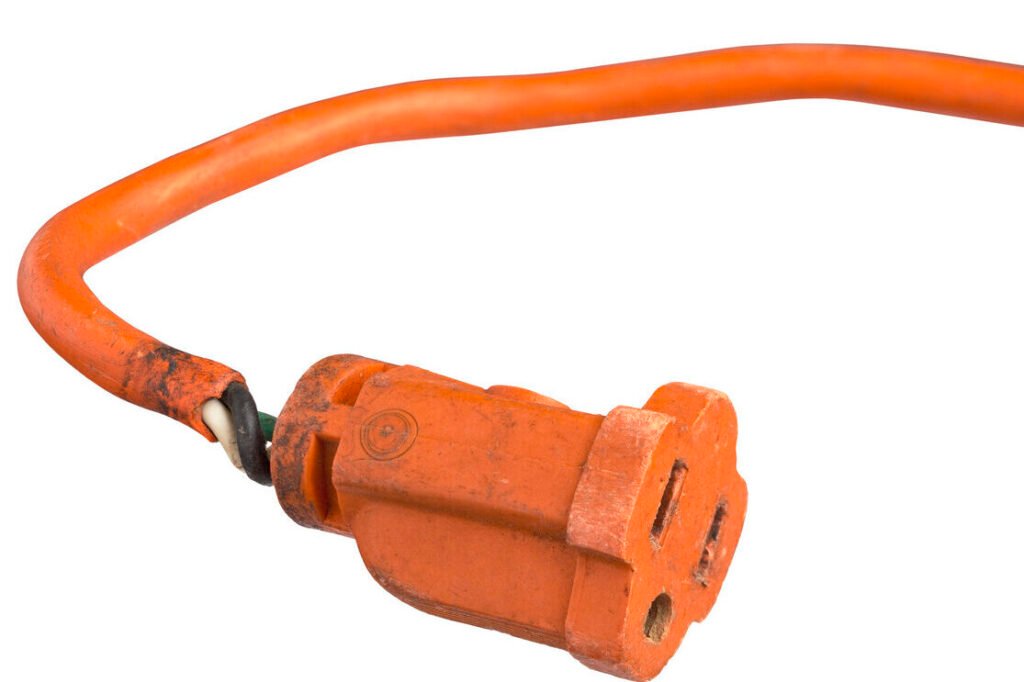
Extension cords were essential long before outlets appeared in convenient places. In the ’70s they usually lived in a messy pile somewhere in the garage or basement. Some were bright orange while others were dull brown or green. No matter how carefully someone tried to coil them, they always ended up tangled again. Untangling one before using it became part of the routine.
These cords powered lawn tools, basement lamps, and holiday lights. They stretched across floors and out into driveways whenever a project was underway. Over time the rubber coating sometimes stiffened or cracked from years of use. Yet most families kept them around anyway, just in case. They were the quiet lifeline that connected tools to electricity.
5. A Box of Mystery Light Bulbs

Every basement shelf seemed to hold a cardboard box filled with spare light bulbs. Some were still in their original packaging while others rolled around loose inside. The wattage often varied, and nobody was completely sure which bulb went where. When a light burned out upstairs, someone was sent down to search through the box. It was a small household ritual.
The bulbs were usually dusty from sitting there for years. Occasionally you might discover an odd-shaped one meant for a lamp that no longer existed. Despite the randomness, the box remained important. It meant the house was prepared for the next time the lights went out. Families rarely threw them away, even when newer styles appeared.
6. Plastic Milk Crates
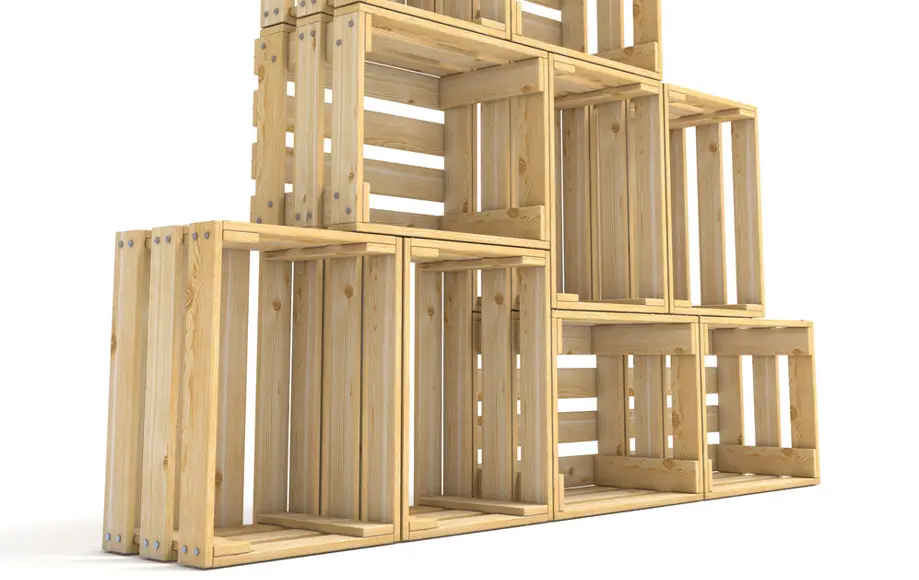
Plastic milk crates had a way of migrating into garages and basements during the ’70s. They were sturdy, stackable, and perfect for storing just about anything. Some held old magazines or newspapers while others carried tools or sports equipment. The open grid sides made it easy to see what was inside. Their usefulness made them nearly impossible to discard.
Kids sometimes repurposed them as makeshift stools or small tables. In garages they became organizers for car supplies and cleaning products. Over time the crates collected scratches and faded from years of use. Even so, they continued to serve as reliable storage containers. They were simple, practical, and everywhere.
7. Rusty Hand Tools
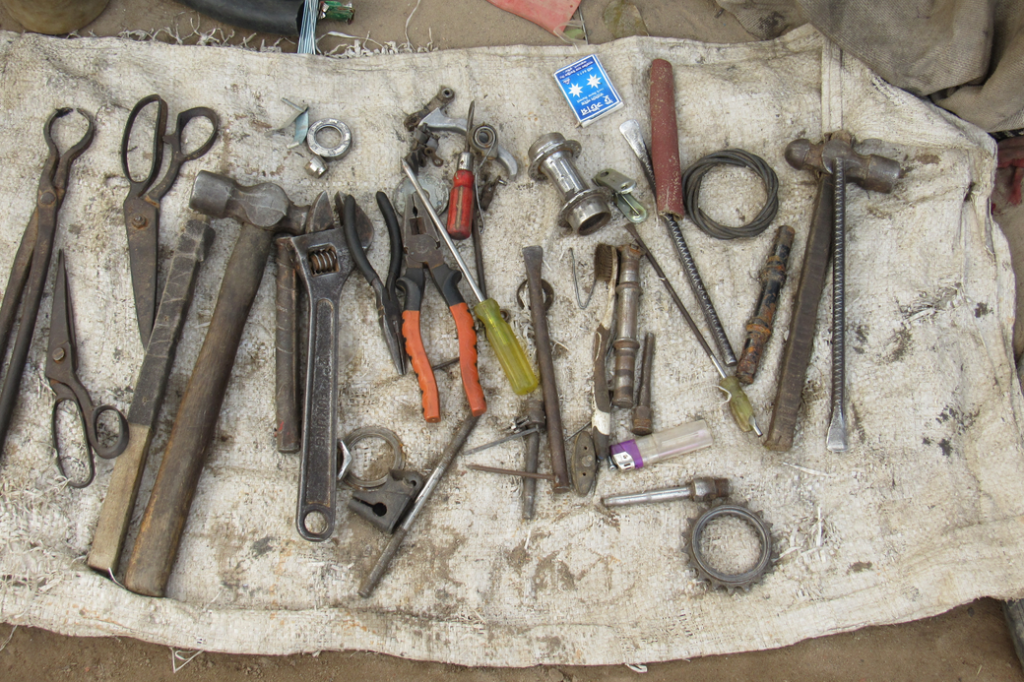
Basement pegboards often displayed an assortment of hand tools that had clearly seen a lot of use. Hammers, wrenches, and pliers hung from metal hooks in neat rows. Some tools had wooden handles worn smooth from years of grip. Others showed spots of rust that gave them a well used look. Even if newer tools were purchased, the older ones rarely disappeared.
Many of these tools came from earlier generations. A hammer might have belonged to a grandfather who used it decades earlier. That sense of history made them hard to throw away. When something broke around the house, those familiar tools were the first ones grabbed. They carried both practical value and quiet nostalgia.
8. Cardboard Boxes of Old Holiday Decorations

Holiday decorations often ended up stored in worn cardboard boxes in the basement. Labels like “Christmas lights” or “ornaments” were scribbled across the sides. Inside were tangled strings of bulbs, tinsel garlands, and fragile decorations wrapped in newspaper. Opening the box each year felt like rediscovering a small piece of family history. The decorations carried the scent of storage and dust.
Some of the lights only worked halfway, which meant testing each strand before hanging them. A few ornaments inevitably broke over the years, but the rest kept returning every season. The boxes stayed in the basement for most of the year, quietly waiting for the holidays to come around again. They were part storage container and part time capsule. Every item inside had its own story.
9. A Push Reel Lawn Mower
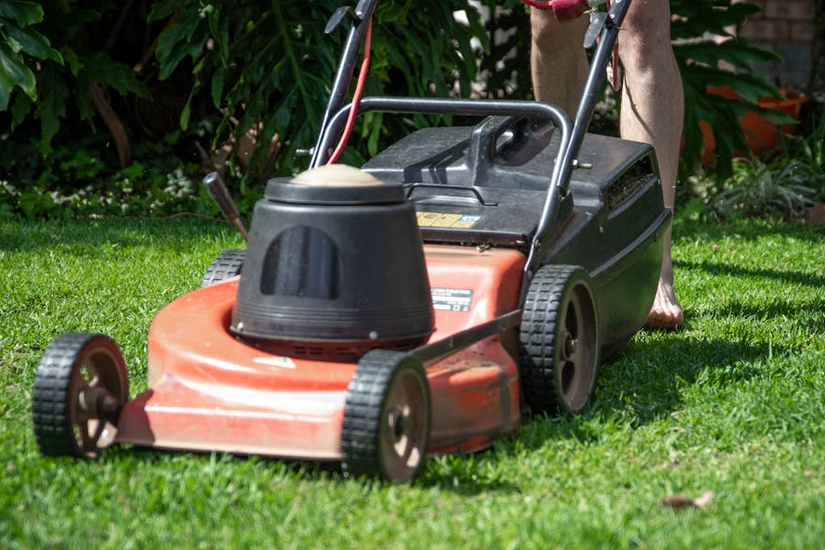
Before gas powered mowers dominated every yard, many homes still kept a push reel mower in the garage. It had spinning blades that whirred as you pushed it across the grass. The design was simple, mechanical, and surprisingly durable. Even after years of use, many continued working with little maintenance. They leaned against garage walls like old garden companions.
Cutting grass with one required patience and a bit of muscle. The sound it made was distinct and rhythmic as the blades spun. Kids were sometimes asked to try mowing with it before graduating to a gas mower. Even when a newer machine arrived, the reel mower often stayed around. It became a backup tool that rarely left the garage.
10. A Stack of Old Paint Cans

Basements and garages often contained several partially used paint cans stacked on a shelf. Each one represented a project from years earlier. The lids were sometimes crusted with dried paint, making them difficult to open. Labels described rooms that might have been repainted long ago. Still, nobody seemed eager to throw them out.
Homeowners kept them in case a wall needed a quick touch up someday. Some cans had colors that no longer matched anything in the house. Others had thickened paint that was barely usable. Yet they remained stored carefully in their corner. They were reminders of every past home improvement project.
11. An Old Radio for Garage Projects

Many garages had a small radio sitting on a shelf or workbench. It provided background music while someone worked on a car or repaired something around the house. The radio was usually simple, with a few knobs and a slightly crackling speaker. Local stations played rock, country, or talk shows throughout the day. The sound filled the garage while projects slowly took shape.
Sometimes the radio stayed tuned to the same station for years. Dust gathered along the top but it kept working anyway. On weekends it became part of the rhythm of home repairs and tinkering. The music made long tasks feel a little more enjoyable. In many garages it was as essential as any tool.
12. A Shelf of Forgotten Sports Equipment

In one corner of the basement there was often a shelf or box filled with sports equipment. Old baseball gloves, tennis rackets, and deflated basketballs piled up together. Some items belonged to kids who had long since outgrown them. Others were used only once or twice before being forgotten. The collection grew slowly over the years.
Every so often someone would rediscover something in the pile and bring it back outside. A baseball glove might get oiled and used again in the yard. Most of the time, though, the equipment stayed right where it was. It became a quiet record of family hobbies and childhood seasons. Even unused, it felt too sentimental to throw away.