
1. Teddy Ruxpin

When people first opened up Teddy Ruxpin, they were usually surprised by how mechanical he really was. Inside that soft, friendly bear was a cassette player mechanism, complete with spools, a motor, and a series of gears that controlled his mouth and eyes. The tapes themselves had separate audio tracks, one for sound and one that sent signals to move his face in sync with the story. It was a clever piece of engineering for the mid-’80s, especially for something marketed to kids. The wiring was fairly simple by today’s standards, but at the time it felt almost magical. You could actually see how storytelling and robotics were being blended together.
Once you got past the plush exterior, though, it didn’t feel quite as cozy anymore. The hard plastic frame that supported the motor and cassette deck made it clear this was more machine than toy. Parents often noticed how bulky and heavy the internal components were compared to modern electronics. There were no microchips doing complex processing, just straightforward mechanical timing tied to the tape. It also explained why the toy sometimes jammed or fell out of sync. Still, for its time, it was an impressive mix of audio playback and animatronics.
2. Speak & Spell
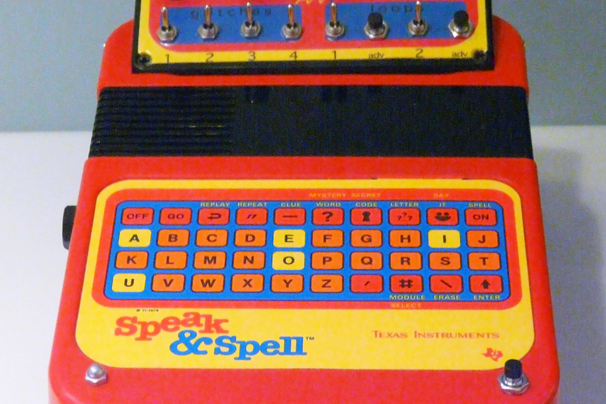
The Speak & Spell looked simple on the outside, but inside it was one of the first toys to use a digital signal processor. Opening it revealed a circuit board dominated by a large chip designed specifically for speech synthesis. That chip, developed in the late ’70s, allowed the toy to generate human-like speech rather than just playing recorded sounds. The keyboard connected directly into the board, feeding inputs that the chip would interpret. It was all powered by basic wiring and a small speaker that gave it that unmistakable robotic voice. Compared to other toys of the era, it was surprisingly advanced.
Looking at it today, the design feels almost minimal. There weren’t many moving parts, just electronics doing all the work. The casing was mostly there to protect the board and keep everything lightweight. It’s interesting how much empty space there was inside, something you rarely see in modern devices. The simplicity also made it fairly durable, which is why so many of them still work. It was less about flashy mechanics and more about pioneering technology in a toy format.
3. Etch A Sketch
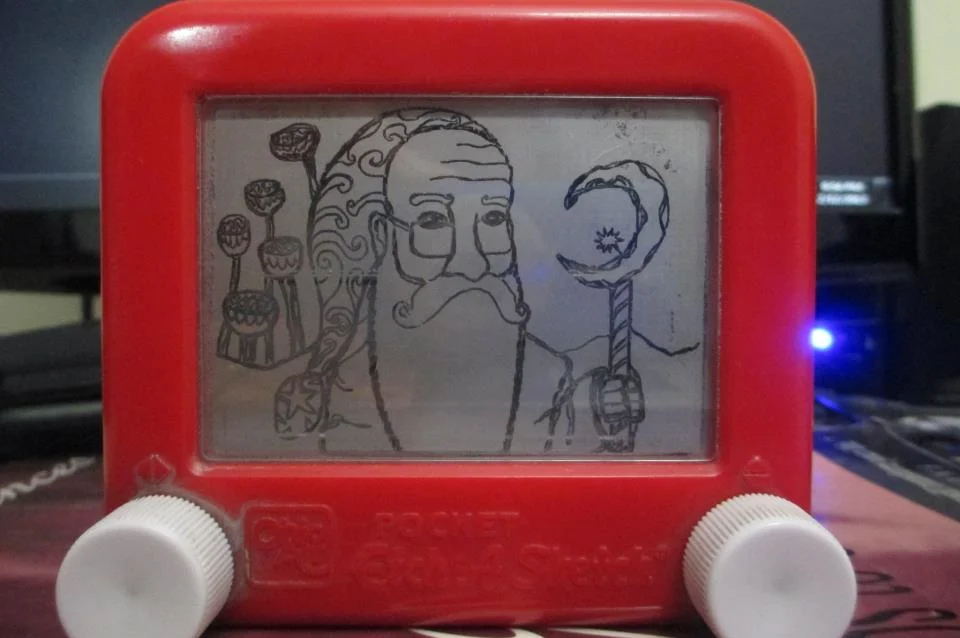
Taking apart an Etch A Sketch reveals a very analog system that relies entirely on physical movement. Inside, there’s a layer of fine aluminum powder coating the back of the screen. The knobs on the front are connected to wires that move a stylus horizontally and vertically across the surface. As the stylus scrapes away the powder, it creates the dark lines you see. There are no electronics involved at all, just a clever mechanical design. It’s a good reminder of how effective simple engineering can be.
Once opened, the mess factor becomes obvious pretty quickly. That aluminum powder can spill out if you’re not careful, which explains why the toy is sealed so tightly. The interior also shows just how precise the wire system has to be to allow smooth drawing. There’s a certain elegance to how it all works without needing batteries. It also explains why shaking it resets everything, the powder simply recoats the screen. It’s one of the few toys where the inside is just as fascinating as the outside.
4. Game Boy
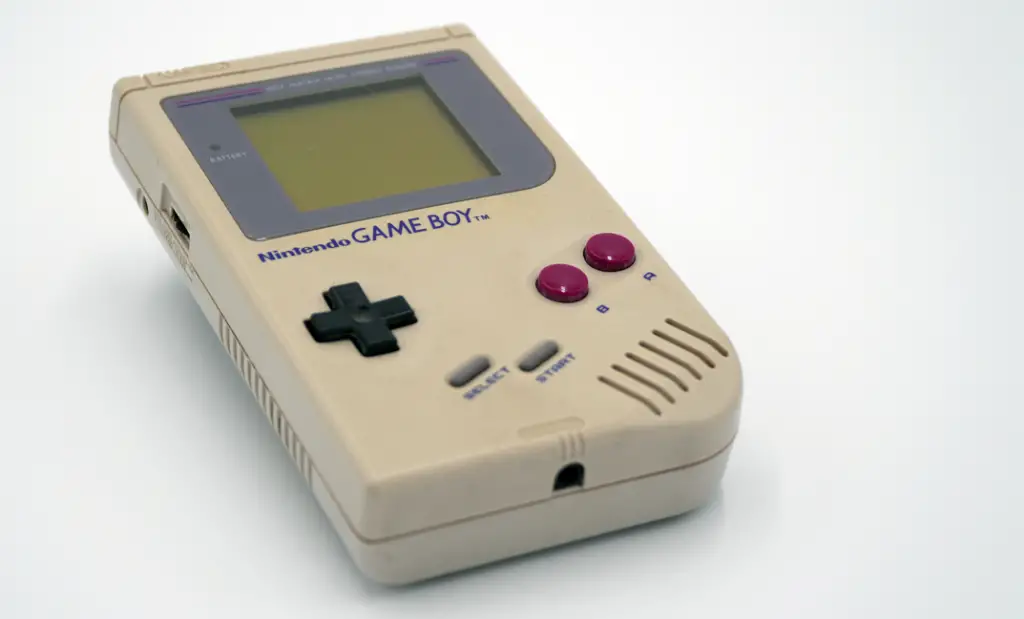
Inside the original Game Boy, you’ll find a compact but thoughtfully arranged set of components. The main circuit board holds the CPU, memory, and cartridge connector, all laid out in a way that maximizes space. The screen is a reflective LCD, which is why it needed good lighting to see clearly. Buttons are connected through rubber membranes that press down onto contact points on the board. There’s also a simple speaker and a surprisingly large battery compartment for four AA batteries. Everything is built for durability and portability.
What stands out is how repairable it is compared to modern handheld devices. The parts are clearly separated, and nothing feels overly crammed together. You can trace how each button press travels through the system to produce a response. The lack of backlighting explains a lot about the design limitations of the time. It’s also why the device could run for so long on a single set of batteries. Overall, it’s a straightforward but very efficient piece of engineering.
5. Furby

Opening up a Furby reveals a surprisingly complex combination of gears, motors, and sensors. At its core is a motor that drives a series of cams, which control the movement of the ears, eyes, and mouth. There’s also a small circuit board that processes input from light and touch sensors. These sensors allowed Furby to respond to its environment, which made it feel more interactive. The wiring connects everything in a tight, compact layout. It’s more intricate than most toys from the late ’90s.
Once exposed, the illusion of personality fades a bit. The movements are all controlled by repeating mechanical patterns rather than true learning. Still, for the time, it gave the impression of something almost alive. The internal frame is sturdy enough to handle all that motion without breaking easily. You can also see why they sometimes made noise even when turned off, the electronics could still receive slight inputs. It’s a good example of how clever design can create the illusion of intelligence.
6. Lite-Brite

Inside a Lite-Brite, things are refreshingly simple. The main component is just a light source, originally a standard incandescent bulb, sitting behind a black pegboard. When you insert the colored pegs, they allow light to pass through and create the image. There’s very little wiring involved beyond powering the bulb. The design relies more on light diffusion than any complex electronics. It’s straightforward and effective.
Opening it up shows just how much heat those older bulbs could generate. That’s why the casing had to be sturdy and well-ventilated. The interior space is mostly empty, giving room for the light to spread evenly. It also explains why modern versions switched to LEDs, which run cooler and last longer. The simplicity is part of what made it so reliable. There’s not much that can go wrong inside.
7. Easy-Bake Oven
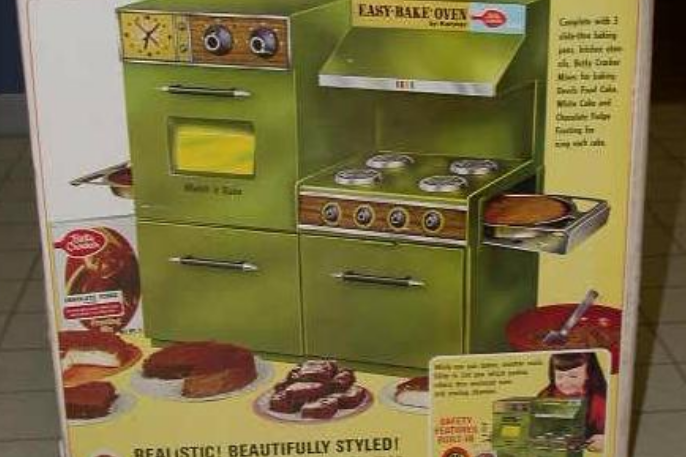
The Easy-Bake Oven is essentially a miniature oven built around a heating element. Earlier versions used a standard incandescent light bulb to generate heat, which is something you wouldn’t expect at first glance. Inside, there’s a small metal chamber where the food sits, along with reflective surfaces to distribute heat evenly. The wiring connects directly to the power source, keeping things simple. It’s basic, but it works.
Seeing it opened up makes you realize how carefully controlled the heat has to be. The design ensures it gets warm enough to cook small treats without becoming dangerous. There are no advanced temperature controls, just a steady heat source. That simplicity is part of why it became so popular. It also explains why baking took longer than in a real oven. Still, it was a clever way to introduce kids to cooking.
8. View-Master
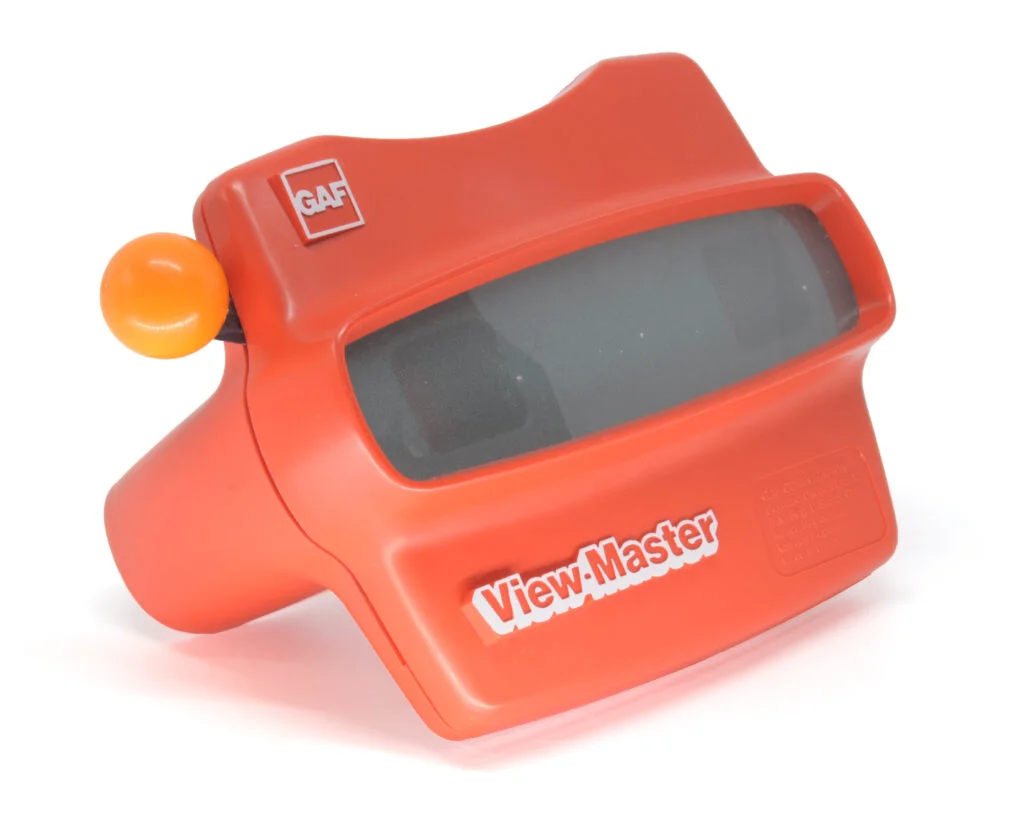
Inside a View-Master, you’ll find a purely optical system. The reels hold small transparencies that are positioned in front of a set of lenses. When you look through the viewer, each eye sees a slightly different image, creating a 3D effect. A simple lever advances the reel to the next image. There are no electronics, just light and lenses working together. It’s a straightforward application of stereoscopy.
Taking it apart highlights how precise the alignment has to be. Even a slight shift in the lenses can throw off the 3D effect. The internal mechanism that clicks the reel into place is also surprisingly sturdy. It’s built to handle repeated use without slipping. The simplicity is part of its longevity. There’s very little inside that can wear out.
9. Bop It

Opening up a Bop It reveals a network of switches and a central circuit board. Each action, twist, pull, or press, is tied to a specific input switch. The board processes these inputs and triggers audio responses through a small speaker. Timing is everything in this toy, and that’s handled by a simple internal clock system. The wiring connects each component in a compact layout. It’s more about coordination than complexity.
Inside, it’s clear that durability was a priority. The switches are built to handle repeated, often rough use. There aren’t many moving parts beyond what you interact with externally. The sound chip stores pre-recorded commands rather than generating them dynamically. That’s why the voice and phrases stay consistent. It’s a straightforward design that focuses on responsiveness.
10. Tamagotchi

The Tamagotchi is built around a small microcontroller and a simple LCD screen. Inside, you’ll find a compact circuit board that handles all the game logic. The buttons connect directly to the board, allowing you to interact with the digital pet. There’s also a tiny speaker for sound effects. Everything is powered by a small coin battery. It’s minimal but effective.
Opening it up shows just how little hardware is needed to create the experience. The complexity comes from the programming, not the physical components. There are no moving parts, which helps with durability. The screen is basic, displaying simple pixel graphics. It’s a good example of how limitations can shape design. Despite its simplicity, it kept people engaged for hours.
11. Hot Wheels Cars

Inside a Hot Wheels car, there’s not much beyond a die-cast metal body and a plastic base. The wheels are mounted on thin metal axles that are designed to reduce friction. Some models include additional weights to improve speed on tracks. The simplicity is intentional, allowing the cars to move quickly and consistently. There are no electronics, just physics at work.
Taking one apart highlights how carefully balanced they are. Even small changes in weight can affect performance. The axles are often the most delicate part, bending if handled too roughly. The design prioritizes speed and durability over detail. That’s part of what made them so popular. They’re built to be played with, not just displayed.
12. Barbie Doll

Opening up a Barbie doll reveals a hollow plastic body with internal supports for the limbs. The arms and legs are attached using simple joint mechanisms that allow limited movement. The head is typically made of softer vinyl and fits onto a hard plastic neck joint. There are no electronics in most versions, just molded parts assembled together. The design focuses on flexibility and durability.
Inside, it’s clear how mass production shaped the construction. The hollow body keeps the doll lightweight and cost-effective to produce. The joints are designed to withstand repeated posing without breaking easily. Hair is rooted into the scalp rather than attached internally. It’s a straightforward structure that hasn’t changed much over the years. The simplicity is part of what made Barbie so enduring.