
1. Adam West and Julie Newmar
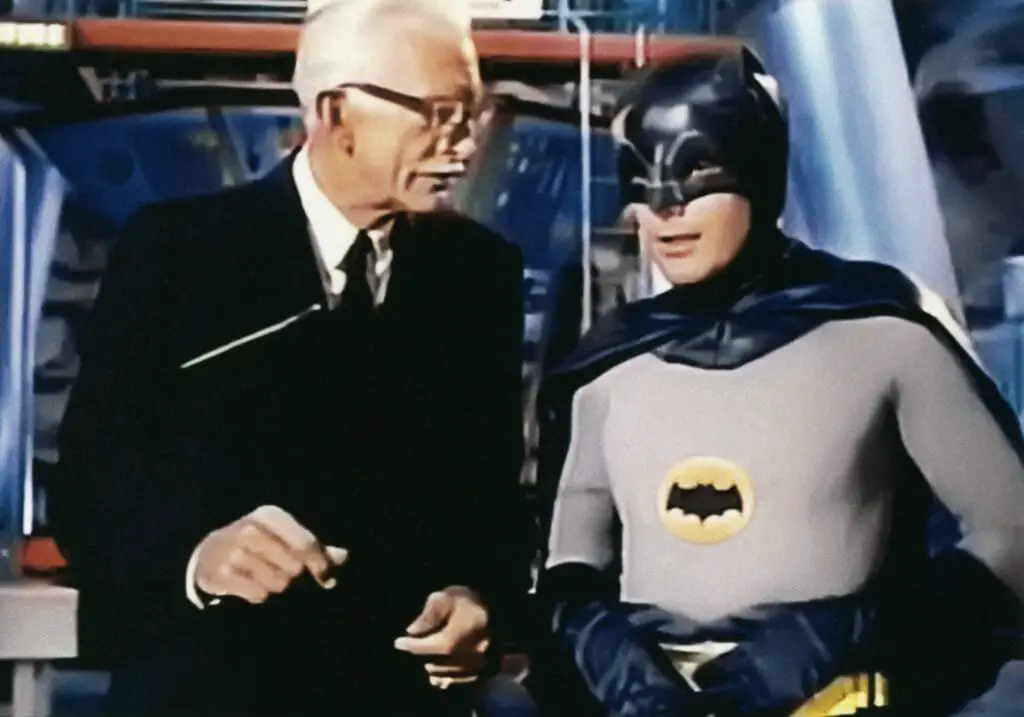
When most people picture early Batman, they’re really thinking of Adam West in the bright, pop-art world of Batman. The show premiered in 1966 and leaned heavily into humor, which West played completely straight, making it even funnier. His version of Bruce Wayne was polite, earnest, and almost impossibly square, which became part of the charm. Opposite him, Julie Newmar’s Catwoman brought a very different energy, smooth, confident, and clearly enjoying every second of the game. She only appeared in two seasons, but she defined the character’s allure for decades. Her physicality, especially the way she moved, became a blueprint for future versions. Together, they set the tone for how Batman and Catwoman could balance tension with playfulness. Even now, their dynamic feels like the starting point for everything that followed.
Newmar’s Catwoman wasn’t just a villain, she was a flirt, a rival, and occasionally an ally. West’s Batman, meanwhile, always treated her with a kind of respectful fascination, which made their scenes stand out. The show’s exaggerated style meant their chemistry had to do a lot of the heavy lifting, and it did. You could tell there was something more underneath the cat-and-mouse routine, even if the show never pushed it too far. That balance helped define the characters beyond comic panels. It also made their pairing one of the most recognizable in superhero TV history. For many fans, this is still the most “fun” version of the duo. And it’s hard to argue with how enduring it’s been.
2. Adam West and Eartha Kitt
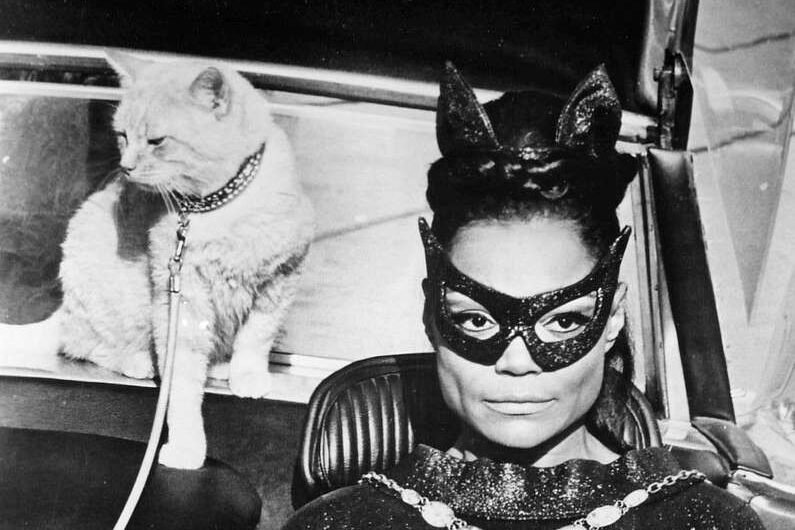
Eartha Kitt stepped into the role of Catwoman in the final season of Batman, and she did not try to imitate Julie Newmar. Instead, she brought her own distinct presence, sharper, more vocal, and with a different kind of elegance. Kitt’s performance had a musicality to it, which makes sense given her background as a singer. Her Catwoman felt slightly more dangerous, less playful and more unpredictable. That shift gave Adam West something new to react to, even within the show’s established tone. Their scenes still had humor, but there was a noticeable edge underneath. Kitt’s version stands out because it refuses to blend in with what came before.
Behind the scenes, Kitt’s casting was also significant, as she was one of the first Black actresses to portray the character on screen. That added an extra layer of importance to her performance, even if the show itself didn’t address it directly. West maintained the same steady, moral center, which made the contrast even more interesting. Kitt’s Catwoman felt like she might actually outmaneuver him at any moment. That tension gave their episodes a slightly different rhythm than earlier ones. It’s a shorter run, but one that left a lasting impression. Many fans now see Kitt’s portrayal as underrated. And it’s easy to see why once you watch her in the role.
3. Michael Keaton and Michelle Pfeiffer
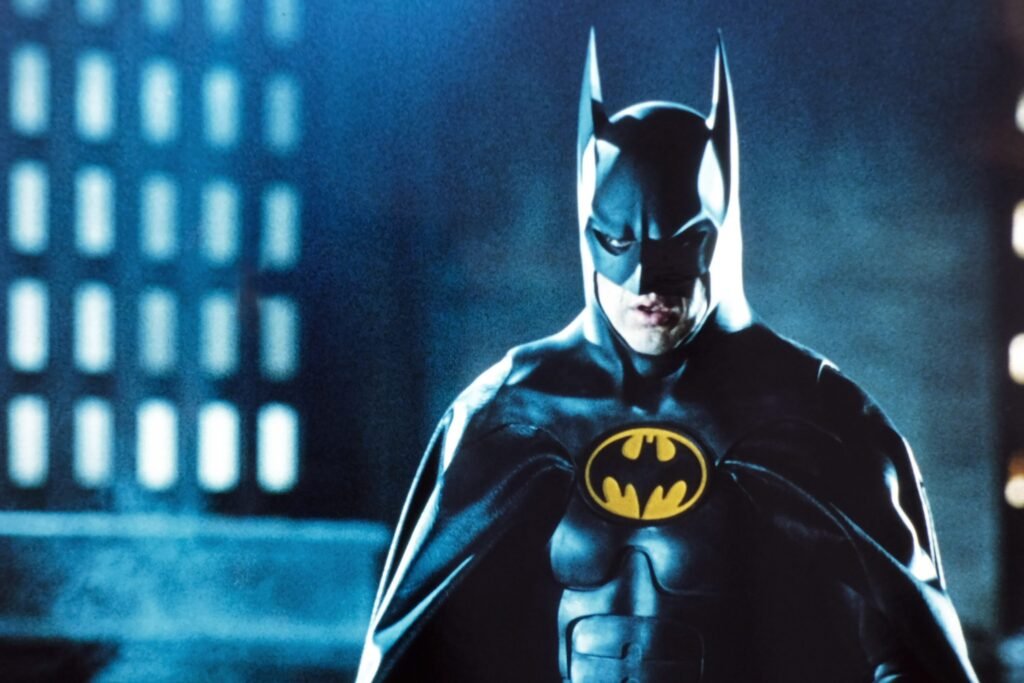
When Tim Burton’s Batman arrived in 1989, Michael Keaton’s casting raised eyebrows, but his performance quickly won people over. He played Bruce Wayne as withdrawn and slightly awkward, which made his Batman feel more internal than previous versions. That approach carried into Batman Returns in 1992, where he faced off against Michelle Pfeiffer’s Catwoman. Pfeiffer’s take on Selina Kyle is still one of the most iconic versions ever put on screen. She starts as a quiet, overlooked secretary before transforming into something far more volatile. The result is a character who feels both empowered and unstable at the same time. Keaton’s restrained style works well opposite her intensity. Their scenes together feel charged in a way that earlier versions never quite reached.
Pfeiffer’s Catwoman walks a line between victim and villain, and that ambiguity drives the story. Keaton’s Batman seems drawn to her, even when he knows she’s dangerous. Their relationship becomes one of the emotional cores of the film. It’s not just hero versus villain, it’s two damaged people recognizing something in each other. That added depth helped redefine how these characters could be portrayed on screen. The costumes and visual style are memorable, but it’s the performances that give them staying power. Many later adaptations borrow from this dynamic. And for a lot of fans, this remains the definitive Batman and Catwoman pairing.
4. Val Kilmer and Lee Meriwether
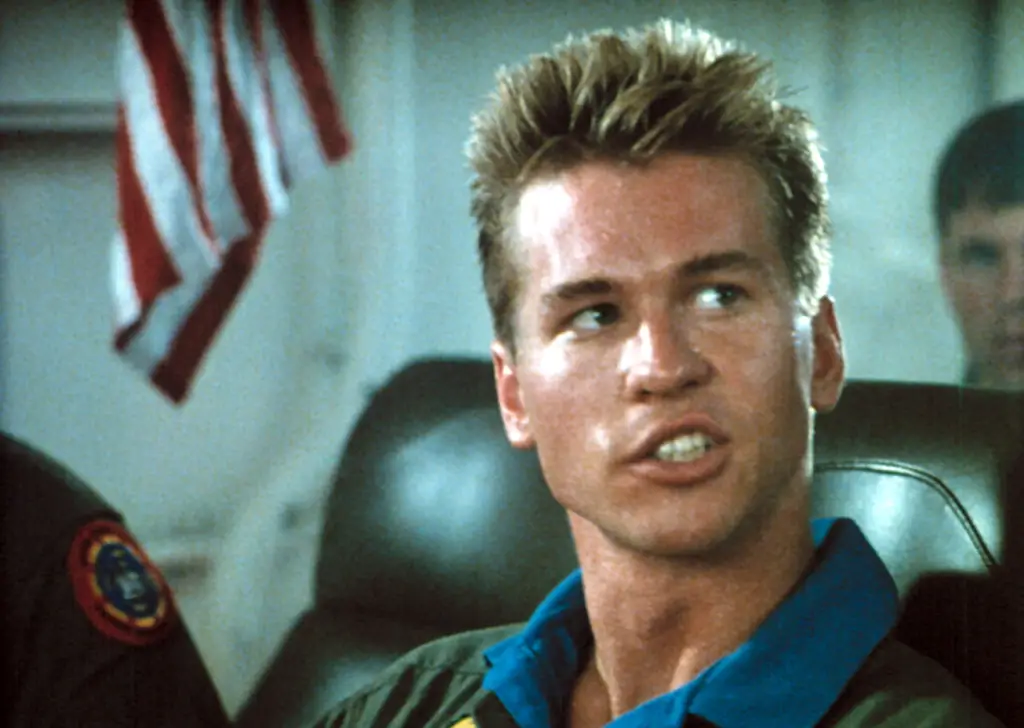
Val Kilmer took over the role of Batman in Batman Forever in 1995, bringing a more traditionally heroic look to Bruce Wayne. His version is more openly conflicted, especially when it comes to balancing his dual identity. While he never shared the screen with a Catwoman in that film, Lee Meriwether had previously portrayed the character in the 1966 Batman movie. Meriwether’s Catwoman sits somewhere between Julie Newmar’s playfulness and a more straightforward villain. She leans into disguises and manipulation, which fits the film’s tone. Pairing these two actors highlights how different eras approached the characters. Kilmer’s Batman is more psychological, while Meriwether’s Catwoman comes from a more theatrical tradition. The contrast shows just how much the franchise shifted over time.
Meriwether’s performance is often overshadowed by the TV versions, but it has its own distinct qualities. She brings a slightly more serious tone to Catwoman, even within the colorful world of the film. Kilmer, on the other hand, is working in a much flashier, mid-‘90s style of superhero movie. His Bruce Wayne spends more time examining his past than earlier versions did. That introspection wasn’t always fully developed, but it added something new. Looking at these portrayals side by side gives a sense of how flexible these characters are. They can be comedic, dramatic, or somewhere in between. And each actor ends up reflecting the tone of their specific era.
5. George Clooney and Halle Berry
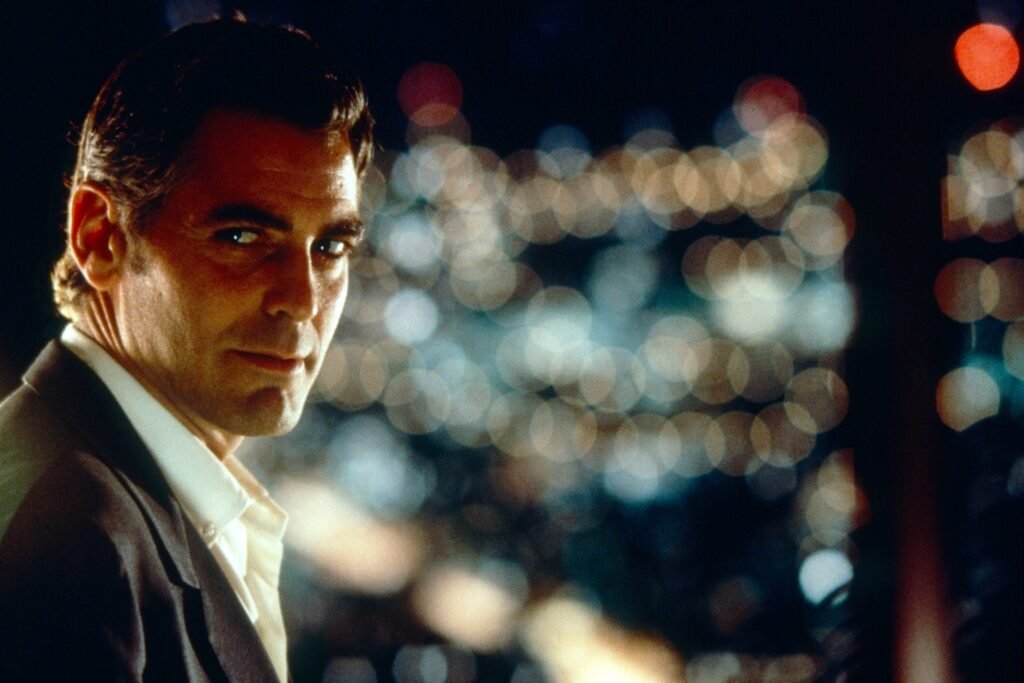
George Clooney’s turn as Batman in Batman & Robin in 1997 is often remembered for its lighter, more exaggerated tone. Clooney himself has been openly critical of the performance in later interviews. His Bruce Wayne is confident and polished, but the film leans heavily into spectacle over character depth. Several years later, Halle Berry starred as Catwoman in the 2004 film Catwoman, which is not directly connected to the Batman series. Berry’s character, Patience Phillips, is a completely different take on the Catwoman concept. The film reimagines the character with new origins and a separate storyline. As a result, it doesn’t interact with any version of Batman at all. Still, Berry’s performance is part of the broader history of the character on screen.
Berry brought a physical, action-oriented approach to the role, emphasizing agility and independence. The film itself received largely negative reviews, and Berry even accepted a Razzie Award for Worst Actress for the role. Despite that, her portrayal remains a notable entry in the character’s evolution. Clooney’s Batman, meanwhile, represents a very specific moment when the franchise leaned too far into camp. Looking at these two performances together shows how uneven the late ‘90s and early 2000s were for these characters. Both actors have acknowledged the challenges of those roles. And both versions are often discussed in terms of what didn’t work. Even so, they remain part of the larger Batman and Catwoman legacy.
6. Christian Bale and Anne Hathaway
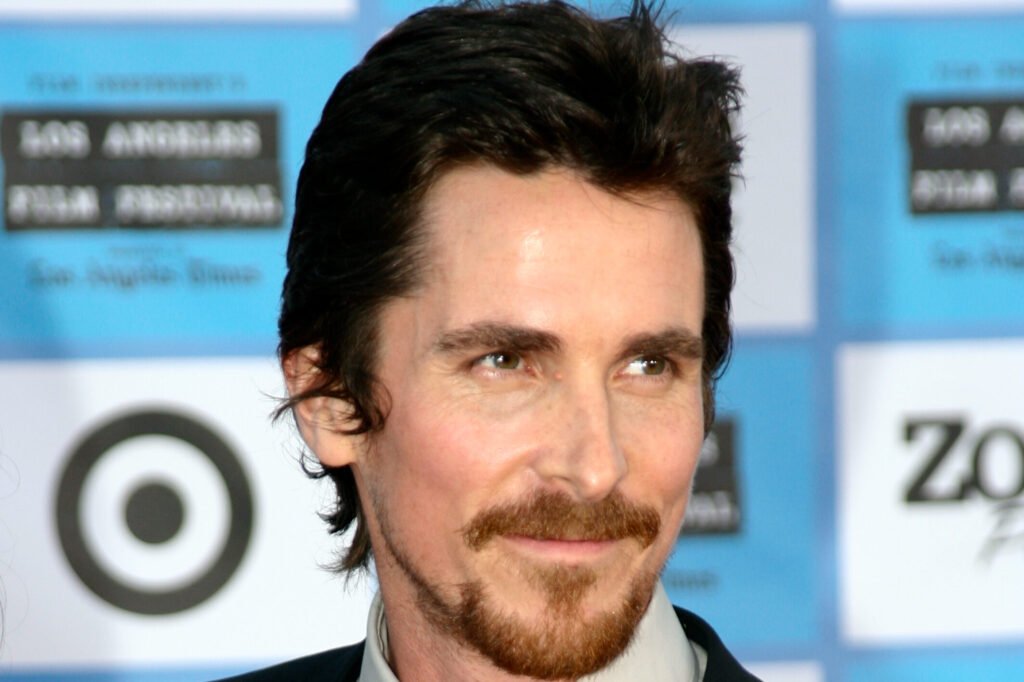
Christian Bale’s Batman, introduced in Batman Begins in 2005, took the character in a more grounded and realistic direction. By the time The Dark Knight Rises arrived in 2012, his version of Bruce Wayne had become more worn down and isolated. Anne Hathaway’s Selina Kyle enters that story as a skilled thief with her own agenda. Her portrayal is less overtly theatrical than earlier versions, focusing instead on intelligence and precision. Hathaway plays Selina as someone constantly adapting to survive. Bale’s Batman, meanwhile, is trying to figure out whether he can leave the role behind. Their interactions feel more like negotiations than flirtation at first. That makes the eventual connection between them feel earned rather than immediate.
Hathaway’s Catwoman doesn’t initially present herself as a villain in the traditional sense. She operates in a moral gray area, which fits the tone of Christopher Nolan’s trilogy. Bale’s performance emphasizes the cost of being Batman, both physically and emotionally. When the two characters align, it feels like a turning point for both of them. Their relationship is quieter than some earlier versions, but it carries weight. By the end of the film, their dynamic suggests the possibility of a different kind of future. That resolution stands out compared to more tragic interpretations. It’s a more subdued pairing, but one that fits the grounded approach of the trilogy.
7. Ben Affleck and Zoë Kravitz
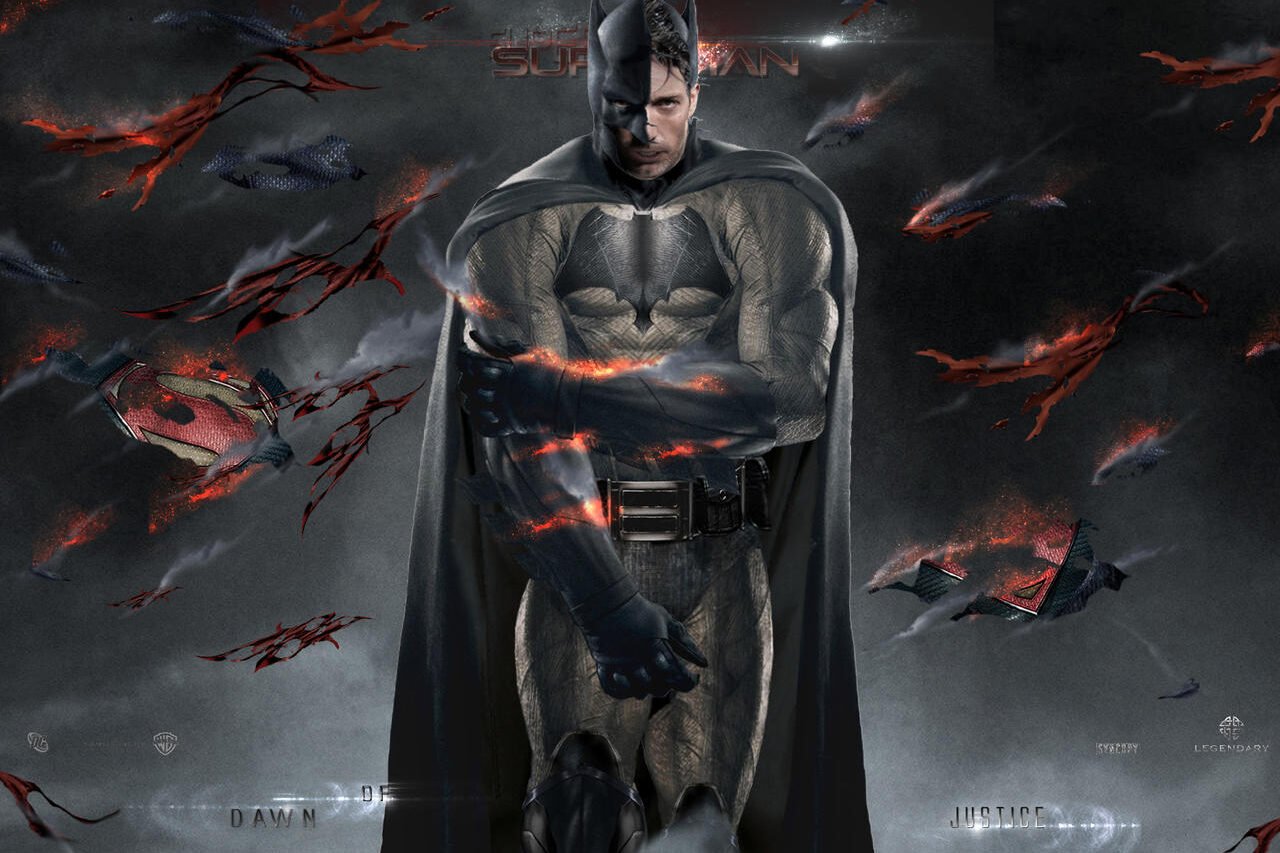
Ben Affleck’s Batman, first introduced in Batman v Superman: Dawn of Justice in 2016, is older and more hardened than previous versions. His portrayal leans into a version of Bruce Wayne who has been fighting crime for years and is starting to lose perspective. Zoë Kravitz, meanwhile, played Selina Kyle in The Batman in 2022, a separate continuity directed by Matt Reeves. Kravitz’s Catwoman is grounded, observant, and driven by personal motivations rather than chaos. Because these versions exist in different universes, the two actors never actually share the screen. Still, comparing them shows how varied modern interpretations can be. Affleck’s Batman is physically imposing and emotionally closed off. Kravitz’s Catwoman is more open but equally guarded in her own way.
Kravitz’s performance was widely praised for bringing a more naturalistic feel to the character. She avoids exaggerated mannerisms and instead focuses on subtle shifts in tone and expression. Affleck’s version, by contrast, is deliberately larger in scale, matching the more operatic style of the films he appears in. Looking at them together highlights how flexible these roles have become in the 21st century. There isn’t a single definitive version anymore. Instead, each actor brings something tailored to their specific story. Even without sharing scenes, they contribute to the evolving legacy of Batman and Catwoman. And both performances sparked strong reactions from audiences.
8. Robert Pattinson and Zoë Kravitz
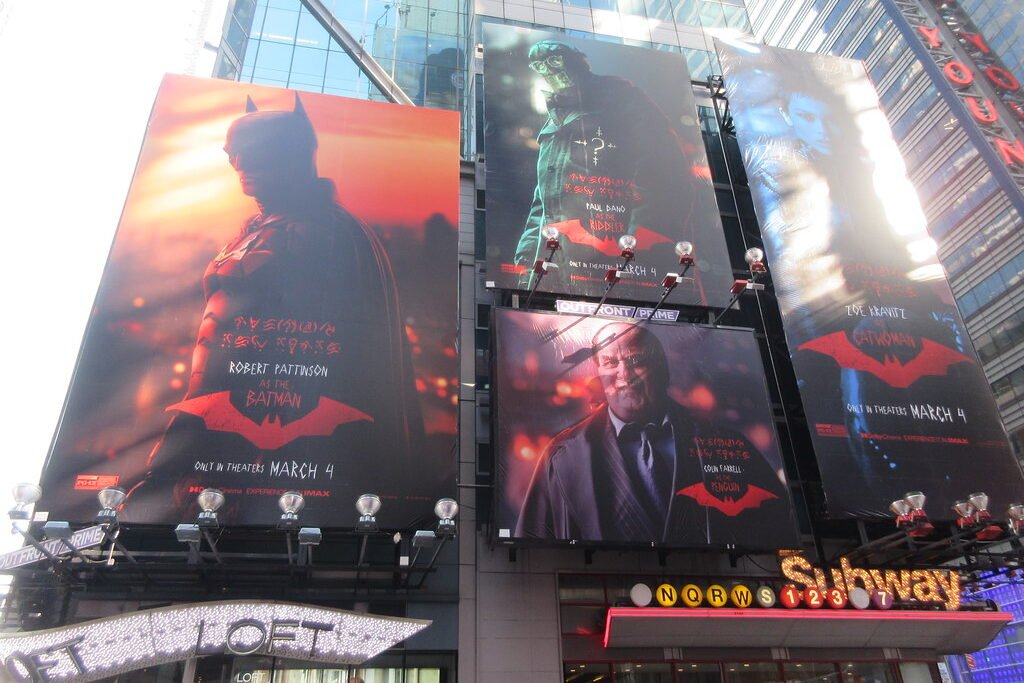
Robert Pattinson’s Batman in The Batman presents a younger, more introspective version of the character. The film, released in 2022, focuses heavily on his early years as a vigilante. Pattinson plays Bruce Wayne as withdrawn and still figuring out what he represents. Zoë Kravitz’s Catwoman fits naturally into that world, operating on the edges of Gotham’s criminal underworld. Their relationship develops slowly, built on shared experiences rather than immediate attraction. Kravitz’s Selina is motivated by personal loss and a desire for justice. Pattinson’s Batman is trying to move beyond vengeance toward something more constructive. That shared trajectory gives their interactions a sense of progression.
The chemistry between them is more understated than in some earlier films. There’s tension, but it’s grounded in the story rather than heightened theatrics. Kravitz brings a sense of realism to the role that aligns with the film’s detective-focused approach. Pattinson’s performance emphasizes observation and restraint. When they work together, it feels like a temporary alliance rather than a permanent partnership. That ambiguity keeps things interesting. The film leaves their future open-ended, which adds to its appeal. It’s a modern take that still respects the core dynamic between the characters.
9. Kevin Conroy and Adrienne Barbeau
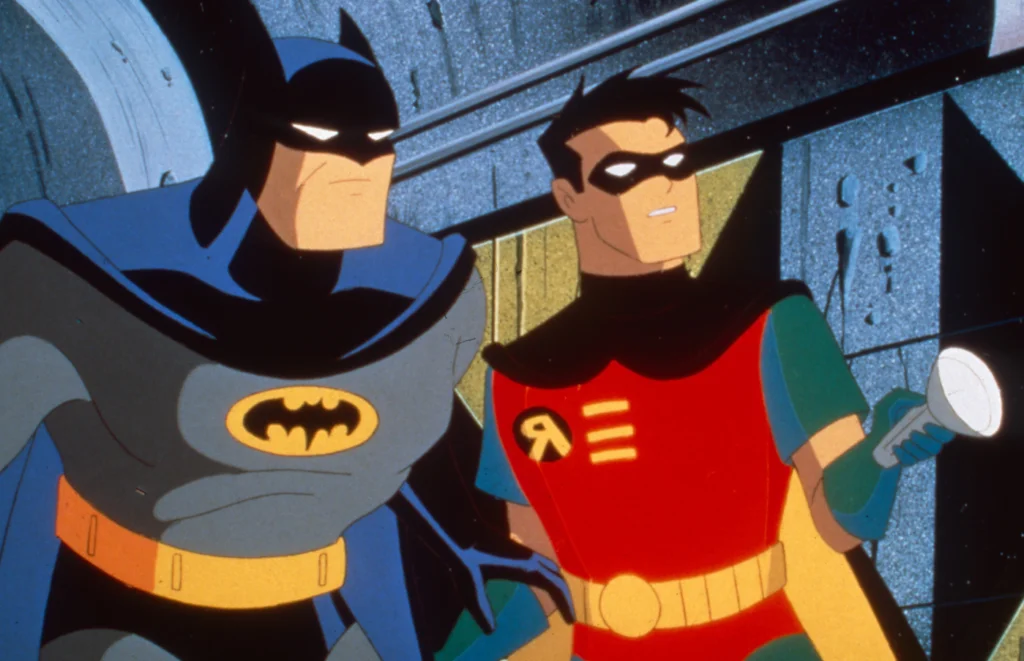
Kevin Conroy’s voice performance as Batman in Batman: The Animated Series is widely considered one of the definitive interpretations of the character. Debuting in 1992, the show combined noir influences with strong character writing. Conroy distinguished between Bruce Wayne and Batman through subtle vocal changes. Adrienne Barbeau voiced Catwoman in the early seasons, bringing a calm, confident tone to Selina Kyle. Her performance emphasized intelligence and control rather than overt seduction. The animated format allowed for more consistent exploration of their relationship. Over time, their dynamic developed across multiple episodes. That gave their connection a depth that films sometimes struggle to achieve.
Barbeau’s Catwoman often operated with her own code, which made her difficult to categorize as purely good or bad. Conroy’s Batman respected that, even when he disagreed with her actions. Their interactions often felt like conversations between equals rather than simple confrontations. The show leaned into moral complexity, which benefited both characters. Because of its longevity, this version reached a wide audience. Many fans grew up with these portrayals as their primary reference point. Even today, Conroy’s voice is closely associated with Batman. And Barbeau’s Catwoman remains a key part of that legacy.
10. Will Arnett and Zoë Kravitz
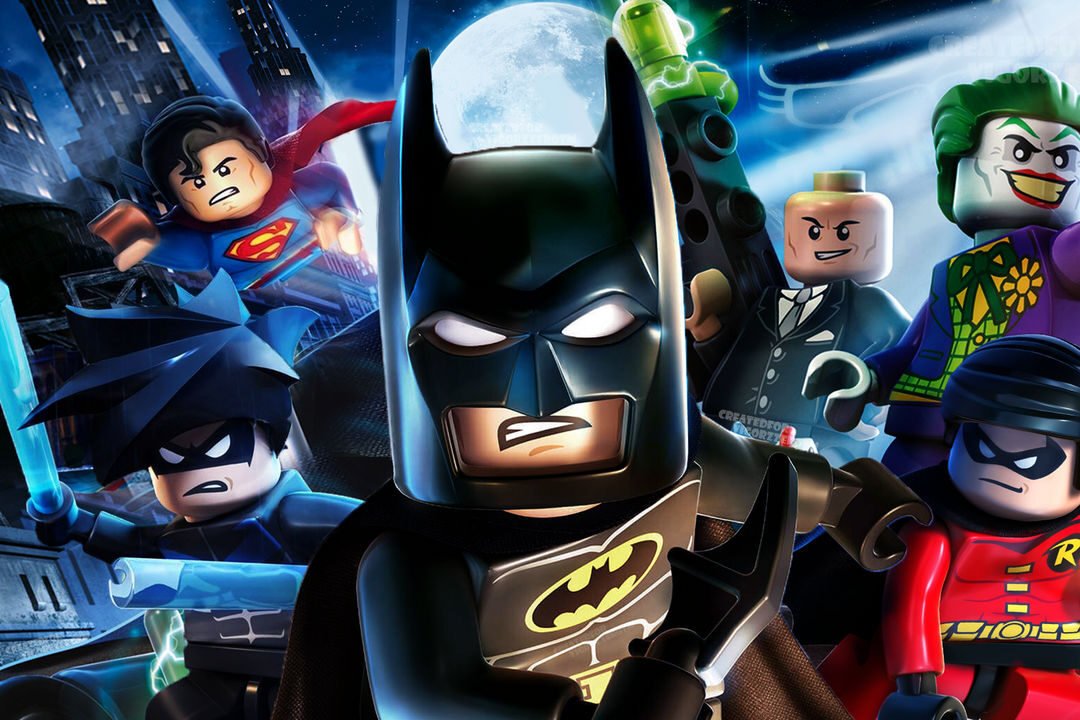
In The Lego Batman Movie from 2017, Will Arnett voiced a deliberately exaggerated version of Batman. The film leans heavily into comedy, poking fun at the character’s brooding tendencies. Arnett plays Batman as self-absorbed and emotionally stunted, which becomes a central joke. Zoë Kravitz also voiced Catwoman in the film, though in a smaller role than in her later live-action appearance. Her version of Selina is more understated compared to the chaos around her. Even within the comedic tone, the film acknowledges the long history of these characters. It references multiple past versions in quick, playful ways. That self-awareness is part of what makes the movie work.
Arnett’s performance highlights the extremes of Batman’s personality, especially his tendency toward isolation. Kravitz’s Catwoman fits into the story without becoming the main focus. The film uses humor to explore themes that more serious adaptations also address. Even though it’s animated, it still contributes to the broader cultural understanding of the characters. The pairing here is less about romance and more about satire. Still, it reflects familiar elements of their relationship. It’s a lighter entry, but one that shows how adaptable these roles are. And it introduced the characters to a younger audience in a different way.
11. David Mazouz and Camren Bicondova
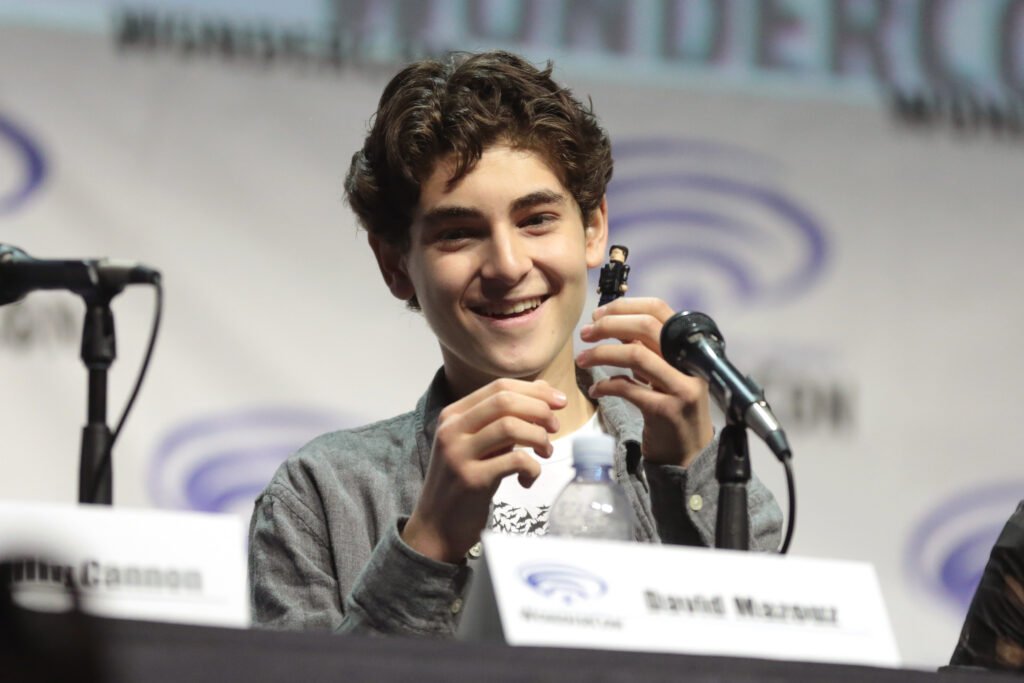
Gotham, which aired from 2014 to 2019, took a different approach by focusing on the early lives of its characters. David Mazouz played a young Bruce Wayne, long before he became Batman. Camren Bicondova portrayed Selina Kyle as a street-smart teenager navigating a dangerous city. Their relationship is built over time, starting as a cautious friendship. Because they are both still growing into their identities, the dynamic feels more uncertain. Bicondova’s Selina is independent and wary of trust. Mazouz’s Bruce is driven by a need to understand his parents’ deaths. That shared sense of loss creates a connection between them.
The show allows their relationship to evolve gradually, rather than jumping straight into familiar roles. Bicondova brings a grounded, physical performance that reflects Selina’s life on the streets. Mazouz’s portrayal emphasizes curiosity and determination. As the series progresses, you can see hints of who they will eventually become. Their interactions often foreshadow the more complex relationship seen in other adaptations. This version is less about Batman and Catwoman as icons and more about Bruce and Selina as people. That shift gives the story a different kind of emotional weight. It’s a long-form exploration that adds depth to both characters.
12. Lewis Wilson and Lee Meriwether
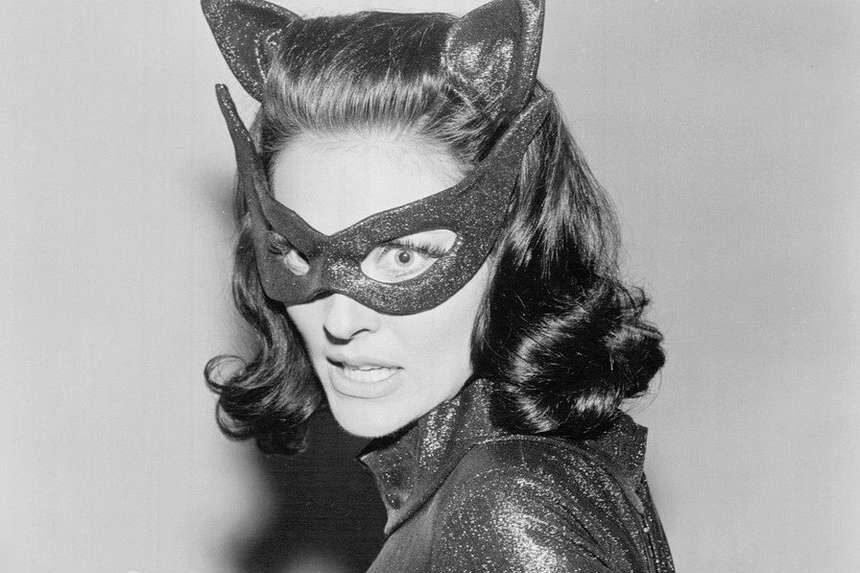
Lewis Wilson was the first actor to portray Batman in a live-action format, appearing in the 1943 Batman serial. His version of the character is very much a product of its time, straightforward and focused on action. The serial format meant the story was told in short, episodic chapters shown in theaters. Catwoman did not appear in that 1943 serial, as the character had only been introduced in the comics a few years earlier. Lee Meriwether, however, brought Catwoman to life in the 1966 Batman film tied to the TV series. Looking at these two performances together highlights how early adaptations were still defining the characters. Wilson’s Batman is more of a traditional hero figure without much psychological depth. Meriwether’s Catwoman, by contrast, already shows signs of the character’s complexity.
Meriwether’s portrayal includes elements of disguise and strategy, which would become central to later versions. Wilson’s performance reflects a simpler era of superhero storytelling. There’s little of the internal conflict that later actors would explore. Pairing them underscores how much the characters evolved in just a couple of decades. From serialized adventures to more character-driven stories, the shift is clear. Even though they never shared a screen, both actors are important to the history of these roles. Their contributions helped lay the groundwork for everything that followed. And without those early interpretations, later versions might look very different.