
1. Waiting for the TV Guide to Tell You What Was On
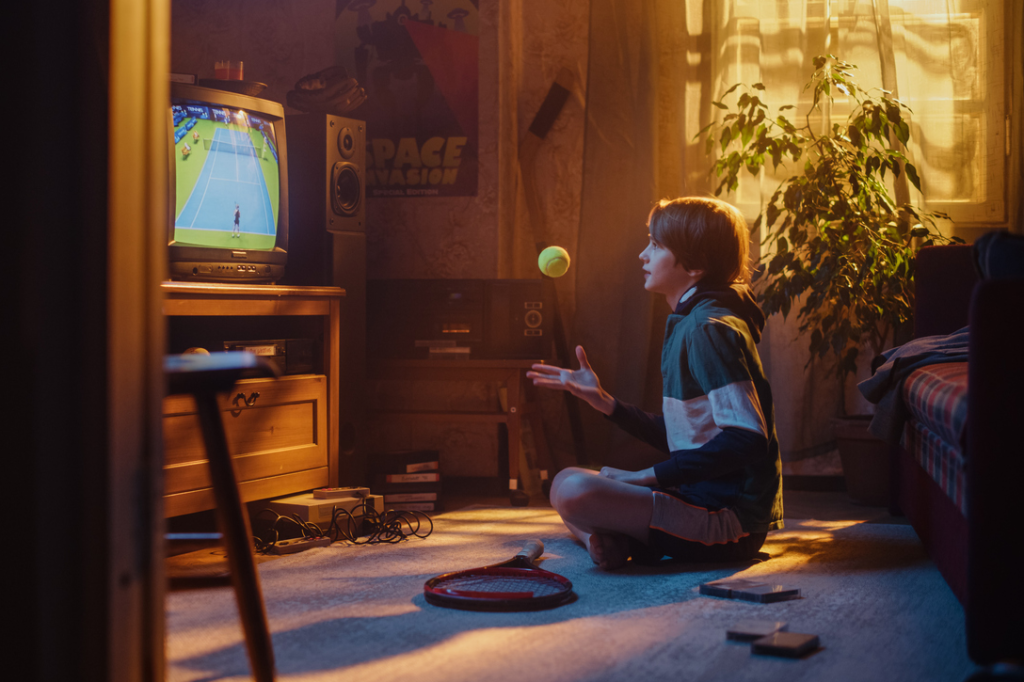
Before streaming and on-screen guides, many families depended on the weekly TV Guide to figure out what they were watching. That little magazine was practically a household command center. You’d flip through the pages looking for your favorite shows and circle them with a pen. Sometimes the cover even featured the stars of the biggest programs of the week.
It also helped settle a lot of living room debates. If someone claimed a show started at 8:30 instead of 9:00, the TV Guide was the final word. Some people even kept old issues stacked near the television. Today most people just scroll through menus, but that tiny magazine once controlled everyone’s evening plans.
2. The Smell of a Brand-New VHS Tape
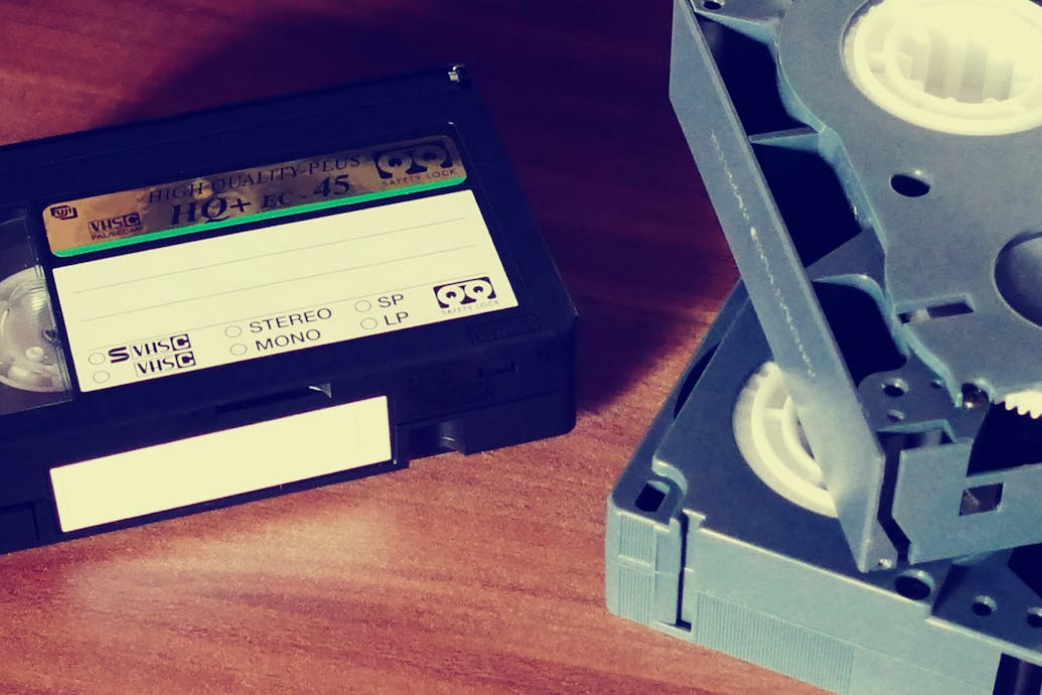
Opening a brand-new VHS tape had a very specific smell that anyone who grew up in the home video era probably remembers. The plastic case snapped open with a satisfying click. Inside sat the black cassette with its clear windows and perfectly wound tape.
Many people first experienced that moment after bringing home a rental from places like Blockbuster or Hollywood Video. Sometimes there was even a “Be Kind, Rewind” sticker on the label. If you forgot to rewind the tape before returning it, you might even get charged a small fee. It was a small ritual that came with watching movies at home before DVDs and streaming took over.
3. Adjusting the Rabbit Ears on the TV
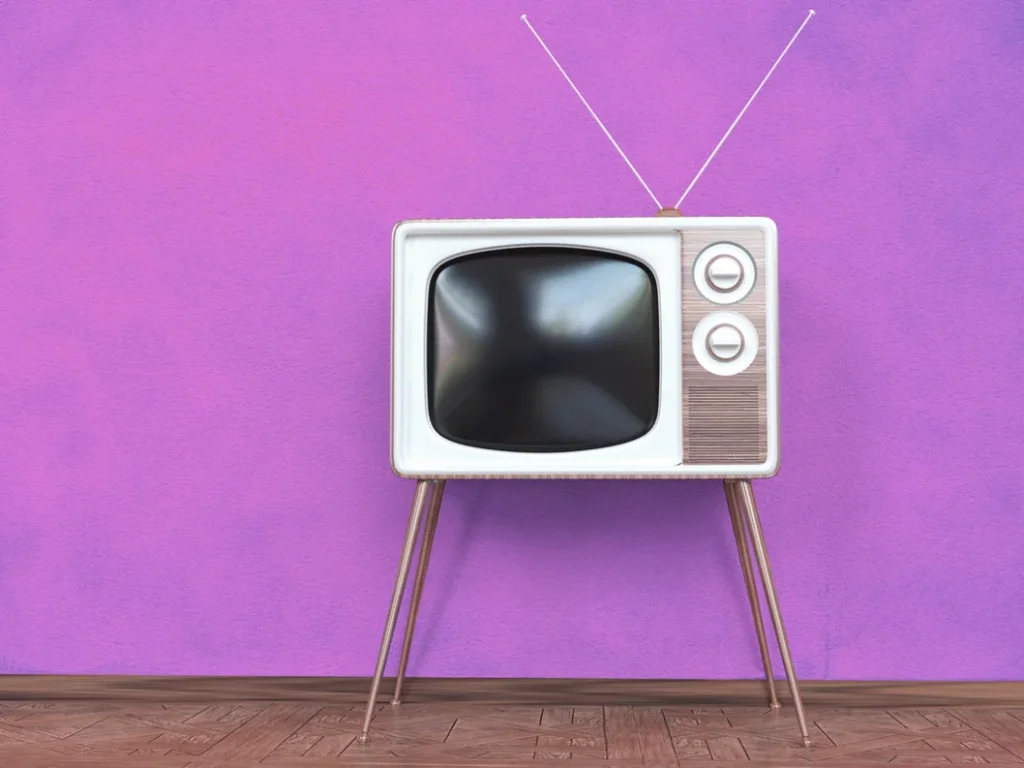
Older televisions often relied on rabbit ear antennas to pick up broadcast channels. Getting a clear picture was rarely simple. Someone usually had to stand behind the TV twisting the metal rods while another person watched the screen.
You’d hear someone shout from across the room, “Hold it right there!” the moment the picture stopped looking snowy. Sometimes aluminum foil even got wrapped around the antenna tips to improve reception. It was a common little household science experiment that disappeared once cable and digital signals became standard.
4. The School Film Projector Rolling Into the Classroom
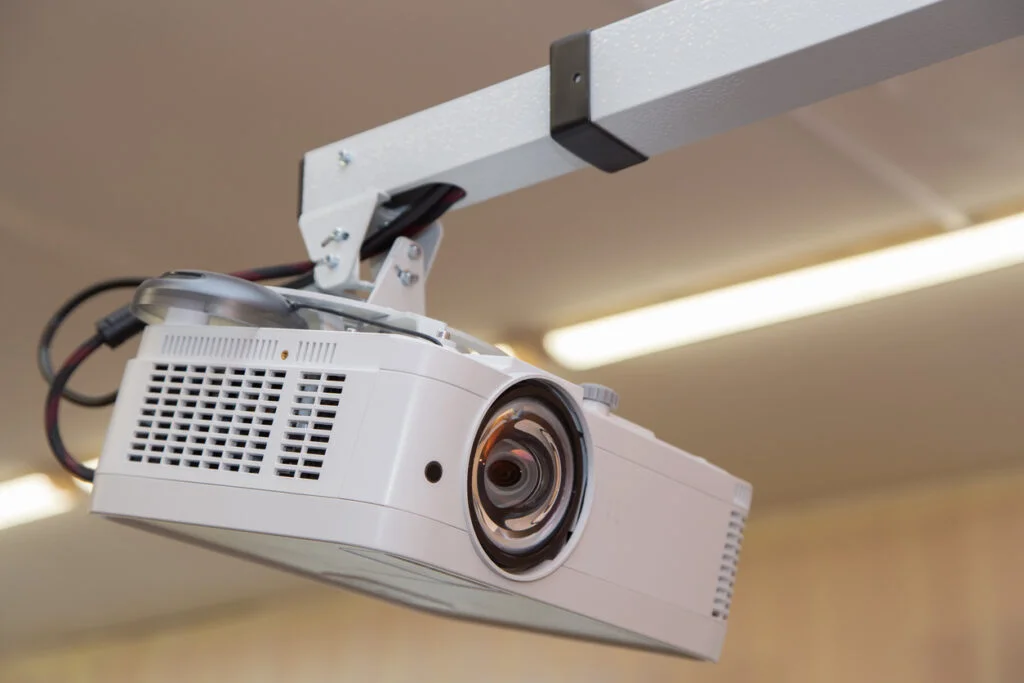
For many students, the sight of the film projector cart meant something special was about to happen. A teacher would wheel in the machine along with a large film reel and dim the classroom lights. The quiet hum of the projector quickly filled the room.
Educational films covered everything from science to history to safety lessons. Occasionally the film would burn or break, leaving a bright flash on the screen. Even then, students usually didn’t mind because it still meant a break from regular classwork. That simple projector became a surprisingly memorable part of school life.
5. The Sound of a Dial-Up Internet Connection

Anyone who used the internet in the ’90s remembers the unmistakable noise of dial-up connecting. The modem produced a series of beeps, screeches and buzzing sounds while trying to establish a connection. It was loud enough that the whole house could hear it.
During that time, using the internet also meant tying up the family phone line. If someone picked up the phone while you were online, the connection could drop instantly. Websites loaded slowly and images appeared one piece at a time. Compared to modern broadband, it now feels like a completely different technological era.
6. Rewinding Cassette Tapes with a Pencil
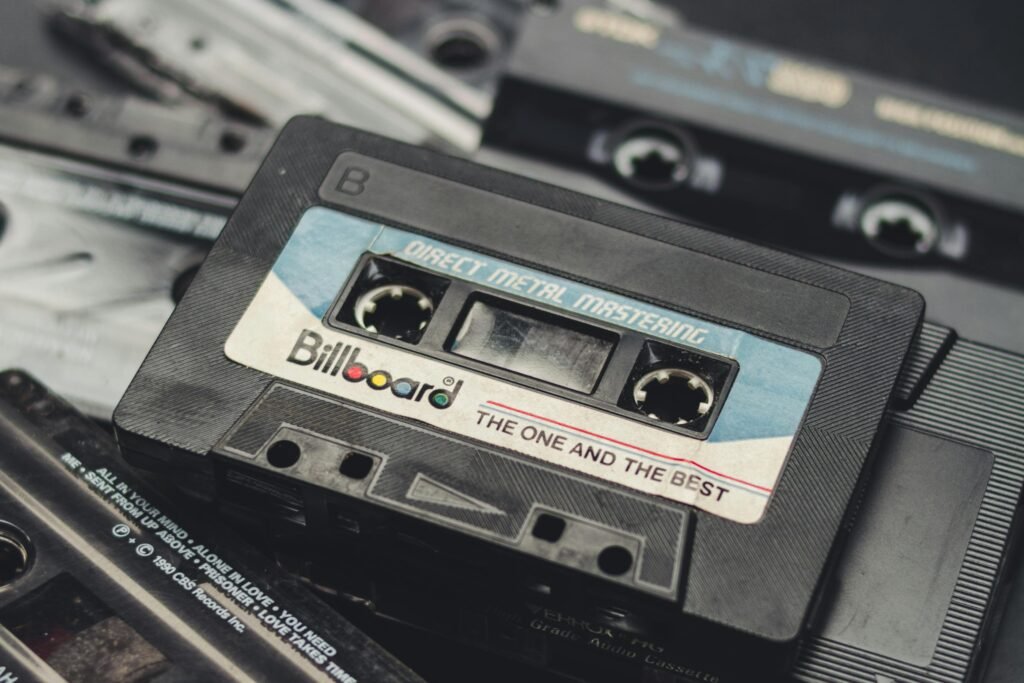
Cassette tapes had a habit of getting tangled or needing a rewind. One of the easiest solutions was using a regular pencil. The hexagonal shape fit almost perfectly into the tape’s spool.
You could spin the pencil quickly to tighten the tape or rewind it manually. It saved wear on your tape player’s motor and sometimes rescued a cassette from getting eaten by the machine. That little trick was widely known among anyone who listened to music on tapes. It is rarely needed now that digital music has replaced physical formats.
7. The Little Plastic Divider Inside a Lunchbox
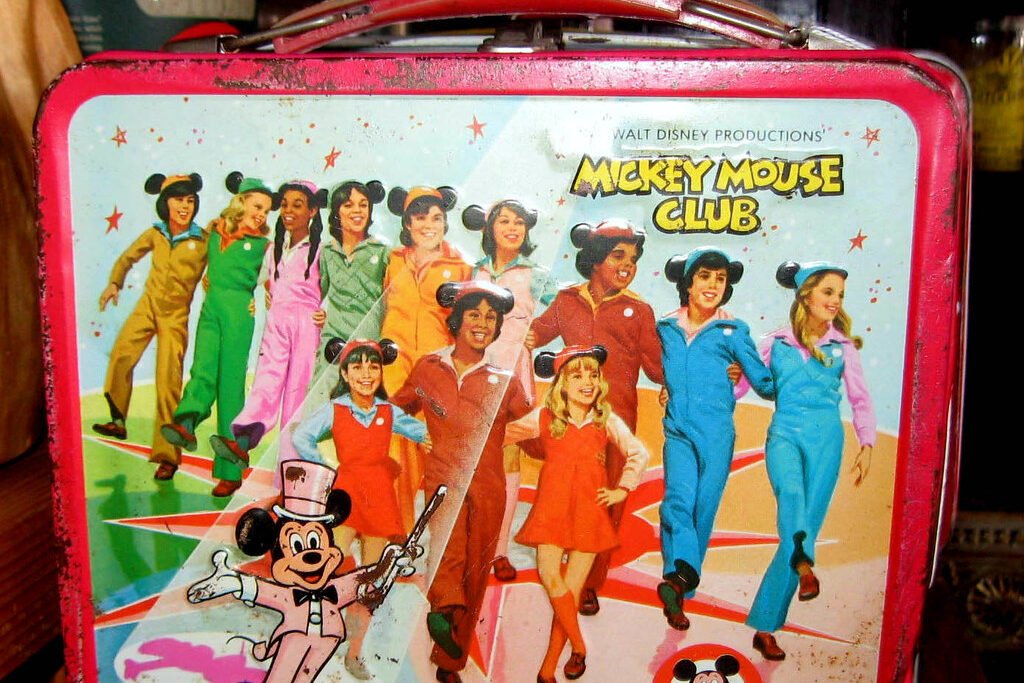
Many classic metal or plastic lunchboxes came with a removable plastic divider. The divider helped keep sandwiches separate from snacks or fruit. It was a simple design, but it made packing lunches a little easier.
Kids often slid the divider around depending on what food they brought that day. Sometimes it even doubled as a tray or plate during lunch. Over time those dividers were easy to lose, which meant the lunchbox became one open space again. Still, a lot of people remember that little insert as part of the everyday lunch routine.
8. The Click of a Disposable Camera
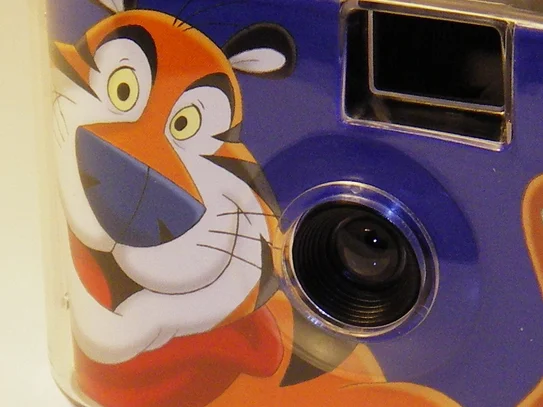
Disposable cameras became extremely popular in the late ’80s and ’90s. They were simple plastic cameras that came preloaded with film. Once you finished the roll, you returned the entire camera to a photo lab to be developed.
Taking photos with them required a little patience. You couldn’t see the picture right away, so there was always some mystery involved. When the prints came back days later, people gathered around to see how they turned out. That delayed reveal was part of the fun that modern digital photography has mostly eliminated.
9. The Card Catalog at the Library
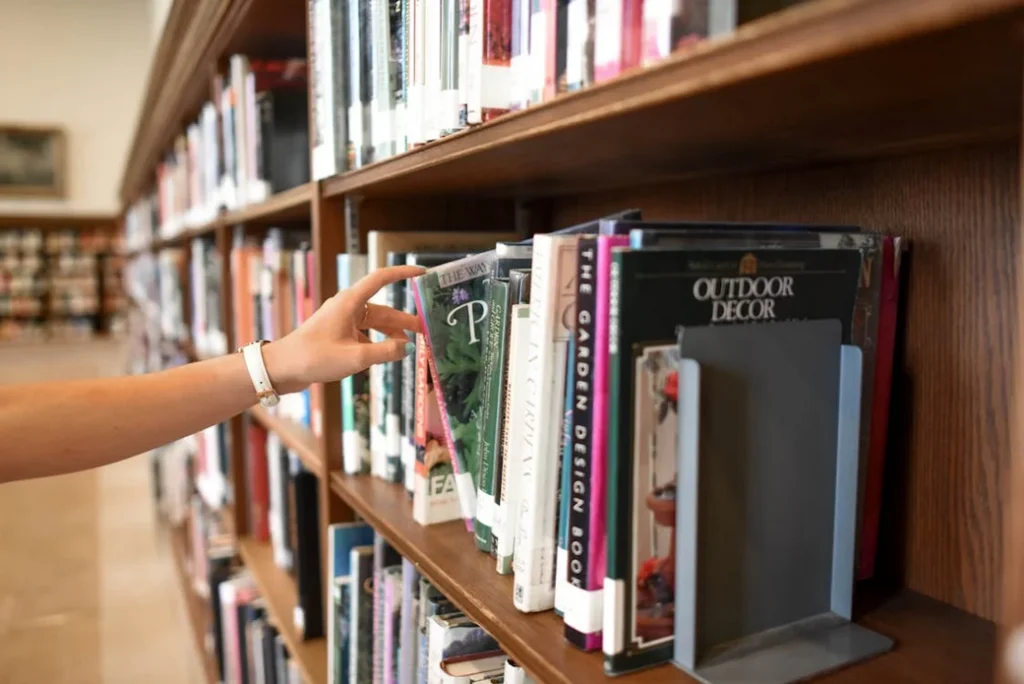
Before computerized systems took over, libraries used large wooden card catalogs to organize books. Each drawer contained hundreds of index cards listing titles, authors and subjects. If you wanted to find a book, you started by flipping through those cards.
Every card had carefully typed information and a call number to guide you to the shelf. Learning how to use the catalog was almost a rite of passage for students doing research. Libraries eventually replaced the system with digital databases in the late 20th century. Many of those beautiful wooden cabinets still exist today, even if they’re no longer used.
10. Blowing Into a Video Game Cartridge
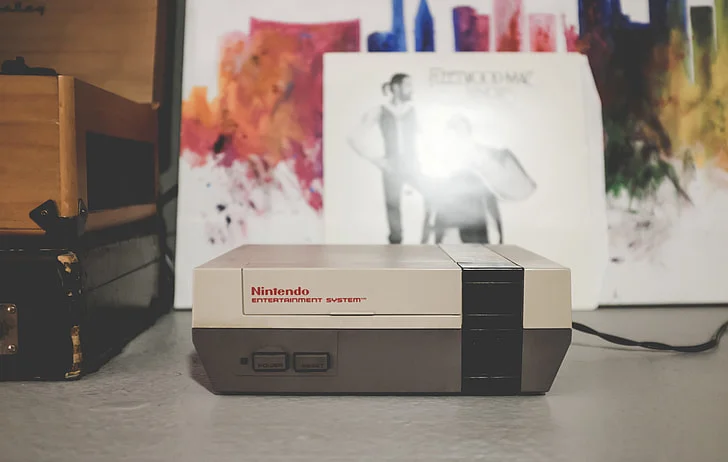
Many early video game consoles used cartridges instead of discs or downloads. Systems like the Nintendo Entertainment System relied on them to load games. Sometimes the console would show a blank or blinking screen when a cartridge was inserted.
A common response was to remove the cartridge and blow into it before trying again. Many players believed it cleaned dust from the connectors. While this trick became famous among gamers, later experts noted that blowing moisture into the cartridge could actually cause corrosion. Even so, the ritual became one of the most widely shared habits of early video gaming.
11. The “Please Be Kind, Rewind” Reminder
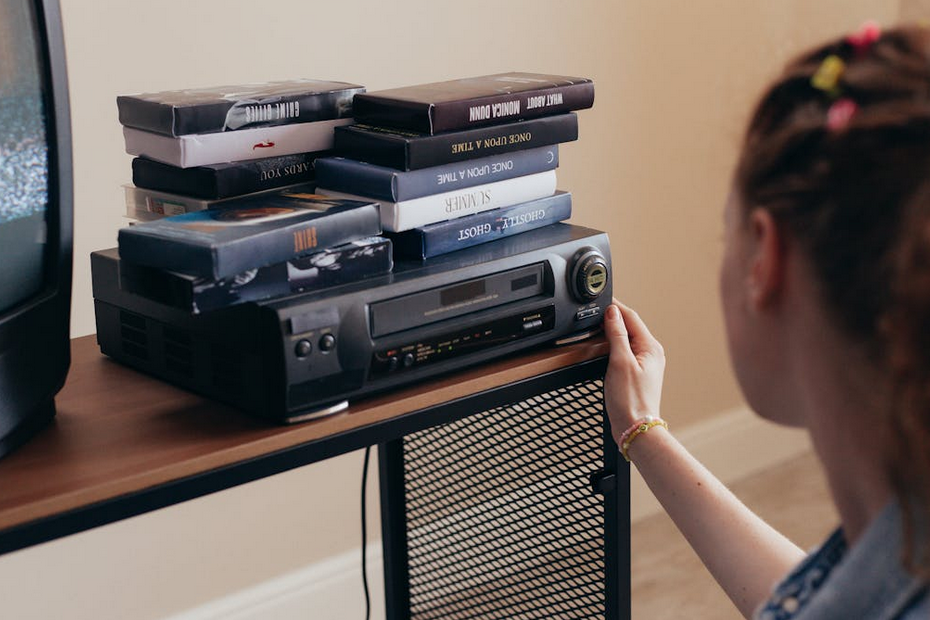
Video rental stores often placed “Please Be Kind, Rewind” stickers directly on VHS tapes. The message reminded customers to rewind the movie before returning it. Rewinding saved store employees time and made the next rental easier.
Some stores even charged small fees if a tape came back without being rewound. As a result, many VCRs had a dedicated rewind button people used right after a movie ended. The phrase eventually became part of pop culture itself. Once DVDs arrived in the late ’90s, rewinding quickly became unnecessary.
12. Calling a Movie Theater for Showtimes
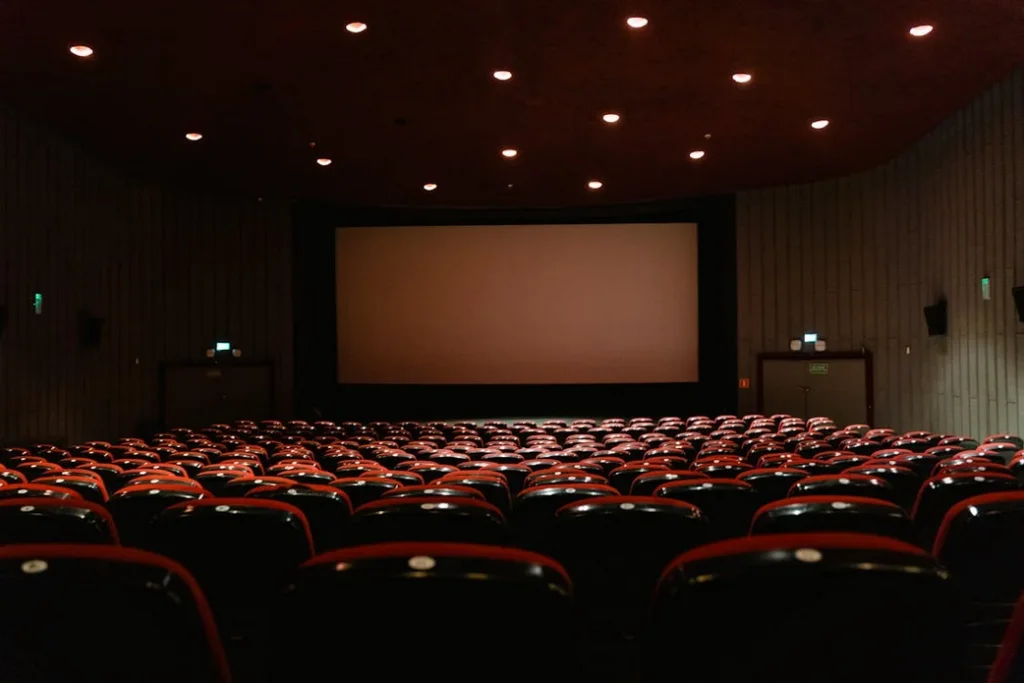
Before internet listings and smartphone apps, many people called their local theater to hear movie schedules. The phone number connected to an automated recording. A calm voice would read the titles of current films along with their showtimes.
Sometimes you had to listen to the entire recording to catch the movie you wanted. If you missed it, you simply waited for the loop to start again. Newspapers also printed showtimes, but the phone line was faster for last-minute plans. It was a routine step for going to the movies for decades.
13. The Chalk Dust on a Classroom Eraser

Traditional chalkboards filled classrooms for generations. Teachers wrote lessons using sticks of chalk that left white dust behind. To clean the board, they used felt erasers that gradually filled with powder.
Occasionally someone had to take the erasers outside and clap them together to remove the dust. A small cloud would puff into the air each time. Many schools later switched to dry-erase boards to avoid the mess. Even so, the smell of chalk and the sight of dust floating in sunlight are still vivid memories for many people.
14. Waiting by the Radio to Record a Song

Recording songs from the radio onto a cassette tape required careful timing. You’d sit with your finger hovering over the record button. The goal was to start recording right when the song began.
Sometimes a DJ talked over the intro or cut in before the song ended. Even so, people created homemade mixtapes this way for years. Those tapes often included small bits of radio chatter between songs. It was one of the earliest ways people curated their own music collections.
15. The Clear Plastic Phone Cord That Always Tangled
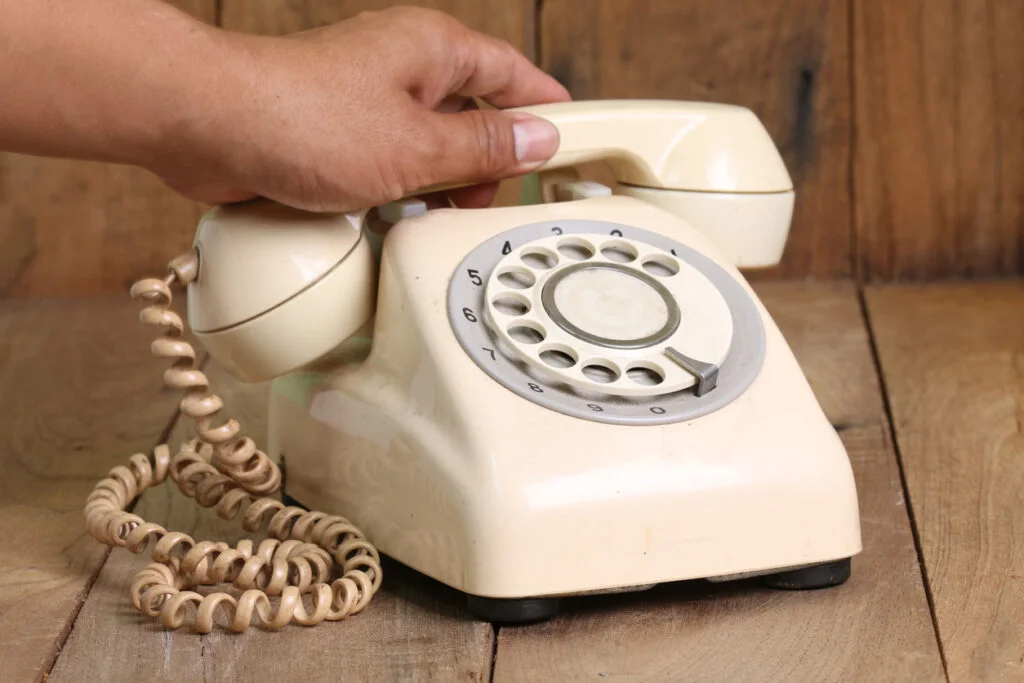
Landline telephones often had long curly cords connecting the handset to the base. Over time those cords twisted themselves into knots. Untangling them became a minor but familiar household chore.
People would hold the handset up and let the cord spin freely to straighten it out. Within days, the tangles usually returned. Cordless phones eventually made the issue disappear. Still, anyone who grew up with landlines remembers those stubborn spiral cords.
16. The Giant Maps at Gas Stations

Before GPS navigation became common, road maps were essential for long trips. Gas stations frequently gave them away for free. The maps were huge sheets of paper that unfolded across the entire car dashboard.
Reading them required patience and sometimes teamwork between driver and passenger. After folding them open, getting them folded back correctly was often the hardest part. Despite the hassle, those maps guided countless family vacations. Today navigation apps have almost completely replaced them.
17. The Clunk of a Typewriter Key
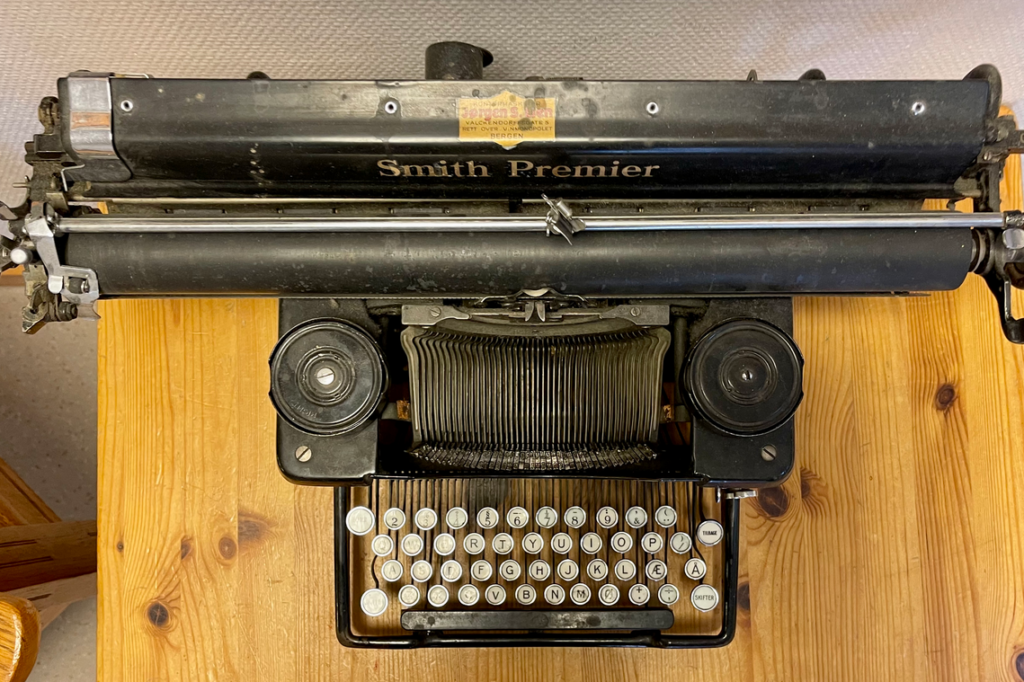
Typewriters were once the standard tool for writing letters, school assignments and office documents. Pressing a key caused a metal arm to strike an ink ribbon against paper. Each letter appeared instantly with a satisfying mechanical clunk.
Mistakes required correction fluid or retyping the entire page. The sound of multiple typewriters in an office created a constant rhythmic chatter. Word processors and computers eventually replaced them during the late 20th century. Still, the tactile feel of those keys remains memorable to many writers.
18. The Saturday Morning Cartoon Lineup
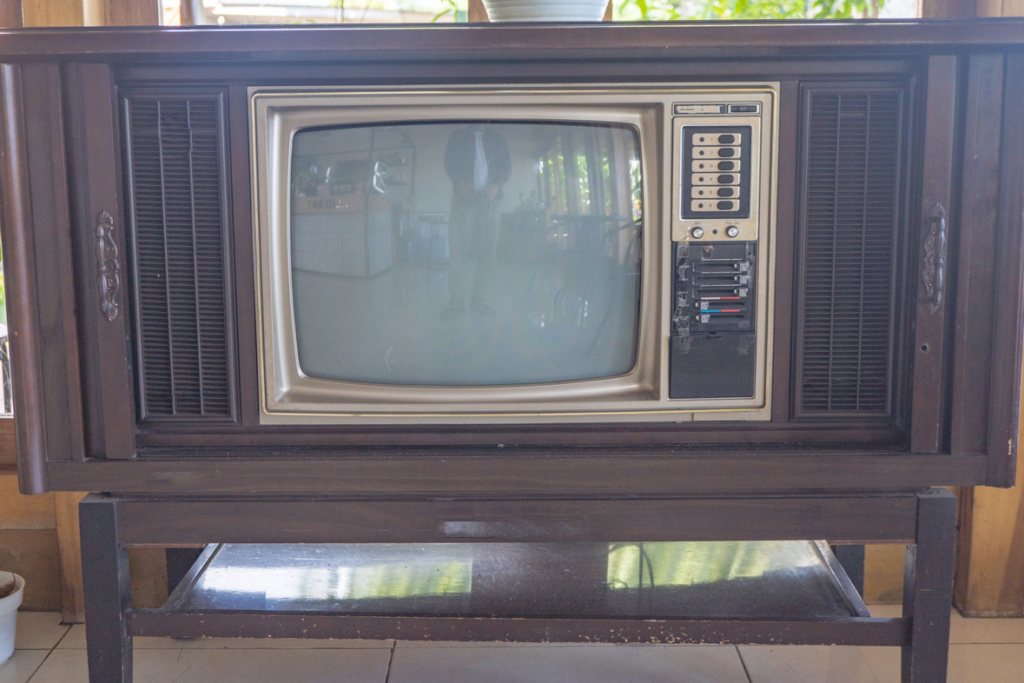
For decades, Saturday mornings were dedicated to children’s cartoons on broadcast television. Major networks scheduled blocks of animated shows starting early in the morning. Kids often woke up early just to watch their favorites.
Shows like Scooby-Doo, The Bugs Bunny Show, and other animated programs filled those hours. Cereal bowls sat nearby as the cartoons played. By the late ’90s and early 2000s, cable channels and streaming changed viewing habits dramatically. The traditional Saturday morning cartoon lineup slowly disappeared from major networks.