
1. Blazing Saddles (1974), “Where the white women at?”
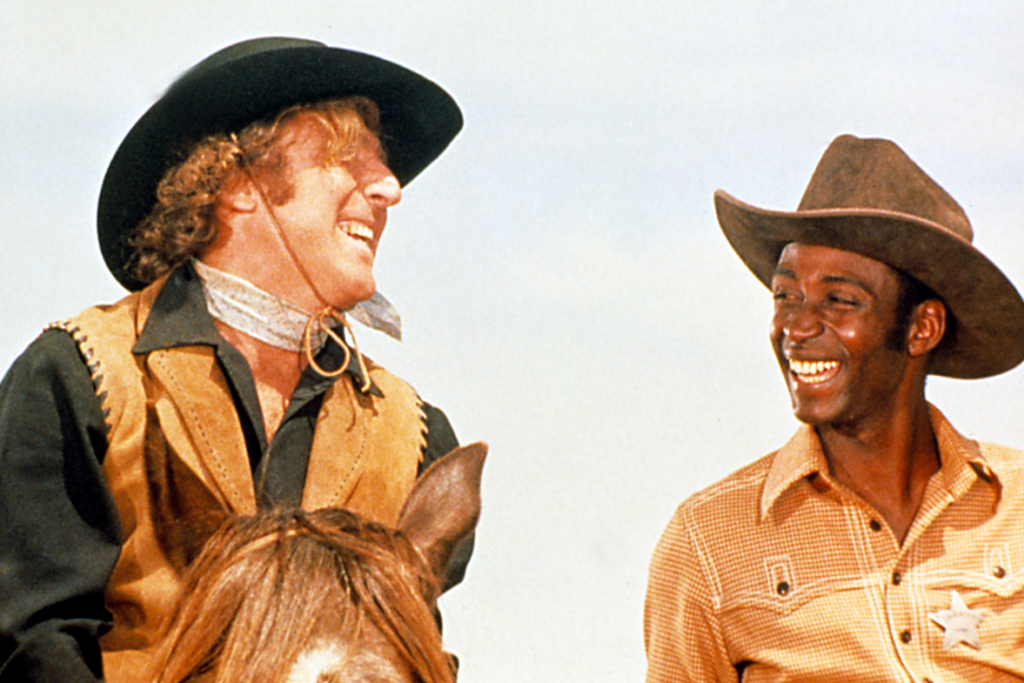
If you’ve seen Blazing Saddles, you already know this line hits like a lightning bolt out of nowhere. It’s shouted by Cleavon Little’s Sheriff Bart as he rides into a town that clearly doesn’t know what to do with him. The moment is chaotic, awkward, and completely intentional, because Brooks was pushing every boundary he could. What makes it land is the timing, it comes right when the tension is building. Instead of easing the audience in, Brooks goes straight for the shock laugh. It’s one of those lines that people quote decades later without even remembering the exact scene. That alone says a lot about its staying power.
What’s interesting is how the humor works on multiple levels. On the surface, it’s absurd and provocative, but underneath it’s part of Brooks’ larger satire about racism and hypocrisy in the Old West myth. The film itself was controversial even in 1974, and this line is a big reason why. Still, Brooks always insisted the joke was on prejudice, not in support of it. That context is what keeps the humor from feeling hollow. It’s uncomfortable, but it’s supposed to be. And that discomfort is exactly where the laugh comes from.
2. Young Frankenstein (1974), “It’s pronounced ‘Fronkensteen.’”
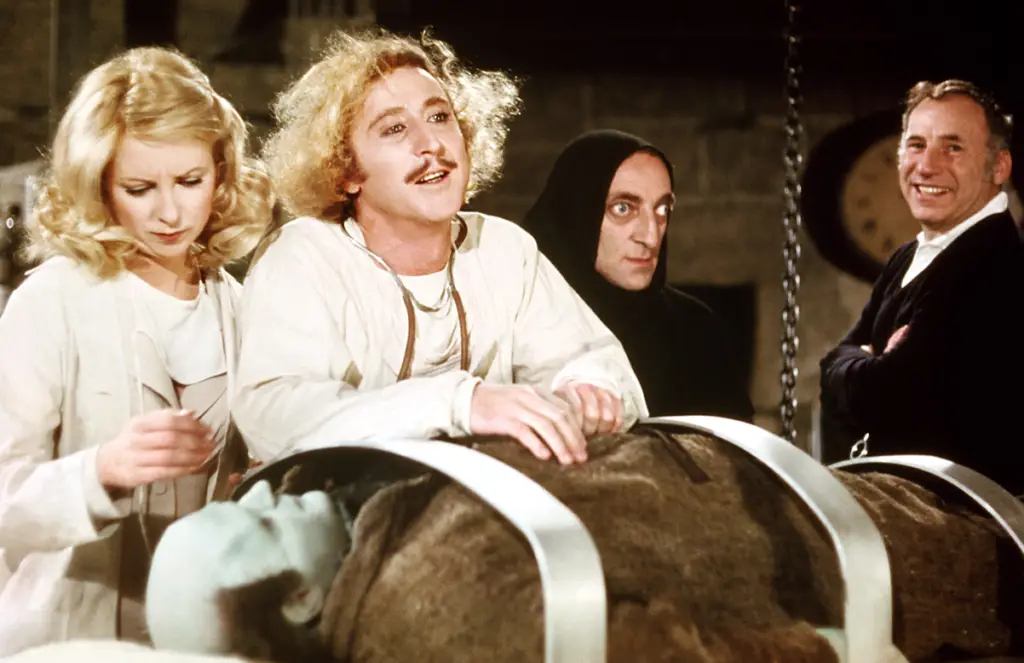
Gene Wilder delivers this line with such conviction that you almost forget how ridiculous it is. As Dr. Frederick Frankenstein insists on correcting everyone, you can feel his desperation to distance himself from his infamous grandfather. The humor builds because nobody around him buys it for a second. Each repetition makes it funnier, especially as the tension grows. Wilder plays it completely straight, which is what sells the joke. If he winked at the audience, it wouldn’t work nearly as well. Instead, he leans into the absurdity like it’s perfectly logical.
This line has become shorthand for Brooks’ style of humor, which often relies on wordplay mixed with character denial. It’s not just a pronunciation gag, it’s about identity and embarrassment wrapped in comedy. Wilder’s performance anchors the film, and moments like this show why. The joke also reflects Brooks’ love of classic horror films, particularly those from Universal in the 1930s. By mimicking their tone and then undercutting it, he creates something both nostalgic and hilarious. It’s simple, but it sticks with you.
3. Spaceballs (1987), “May the Schwartz be with you.”

Brooks took one of the most iconic phrases in movie history and twisted it just enough to make it ridiculous. “May the Schwartz be with you” shows up early in Spaceballs and immediately tells you this is not a serious sci-fi film. The joke works because it’s so close to the original line from Star Wars, yet completely unserious. Brooks understood parody at a structural level, not just surface jokes. He knew audiences would recognize the reference instantly. That recognition is what makes the punchline land.
The “Schwartz” itself becomes a recurring gag throughout the movie, complete with explanations about its size and power. It’s a perfect example of Brooks taking a single joke and expanding it into a running theme. The humor doesn’t rely on subtlety, it’s broad and intentional. That’s part of the charm. Brooks never pretended otherwise. He wanted you to laugh at the absurdity of it all, and this line delivers exactly that.
4. Blazing Saddles (1974), “Badges? We don’t need no stinking badges!”
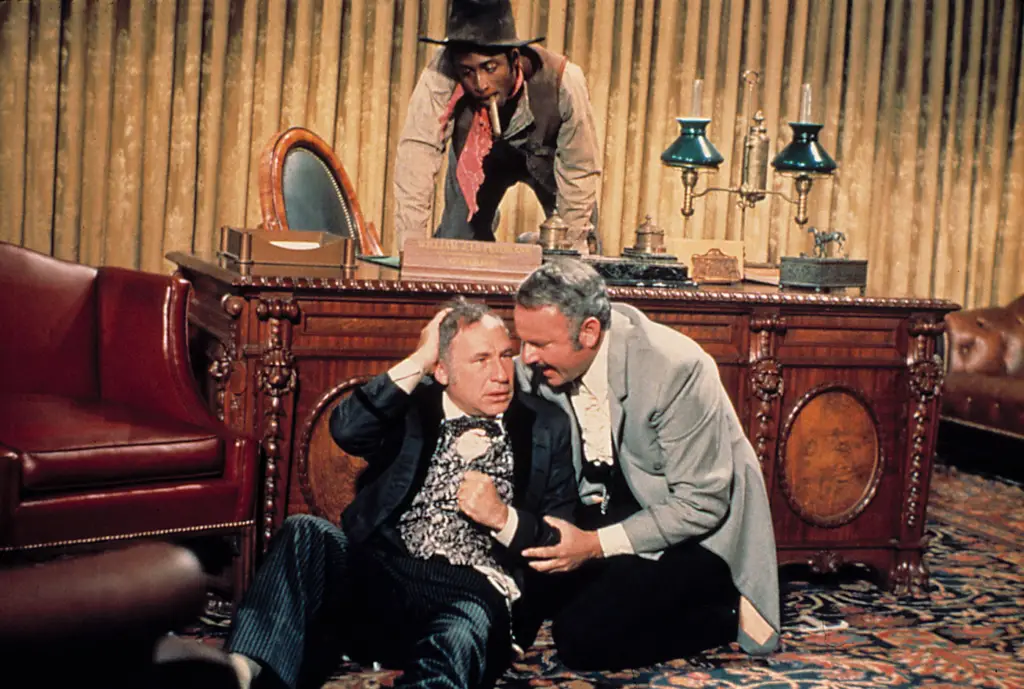
This line actually predates Brooks, originally appearing in The Treasure of the Sierra Madre (1948), but Brooks turned it into something completely new. In Blazing Saddles, it’s delivered with exaggerated bravado by a group of outlaws. The delivery is over the top in exactly the way Brooks intended. By reusing a famous line and pushing it further, he highlights how ridiculous it already was. The audience laughs not just at the line, but at its familiarity.
Brooks had a knack for pulling from film history and reshaping it into parody. This moment is a clear example of that approach. It rewards viewers who recognize the reference while still being funny on its own. The exaggeration is key, everything is dialed up just enough to feel absurd. That balance is hard to achieve, but Brooks makes it look effortless. It’s one of those jokes that feels timeless because it builds on something already embedded in pop culture.
5. Young Frankenstein (1974), “Walk this way.”
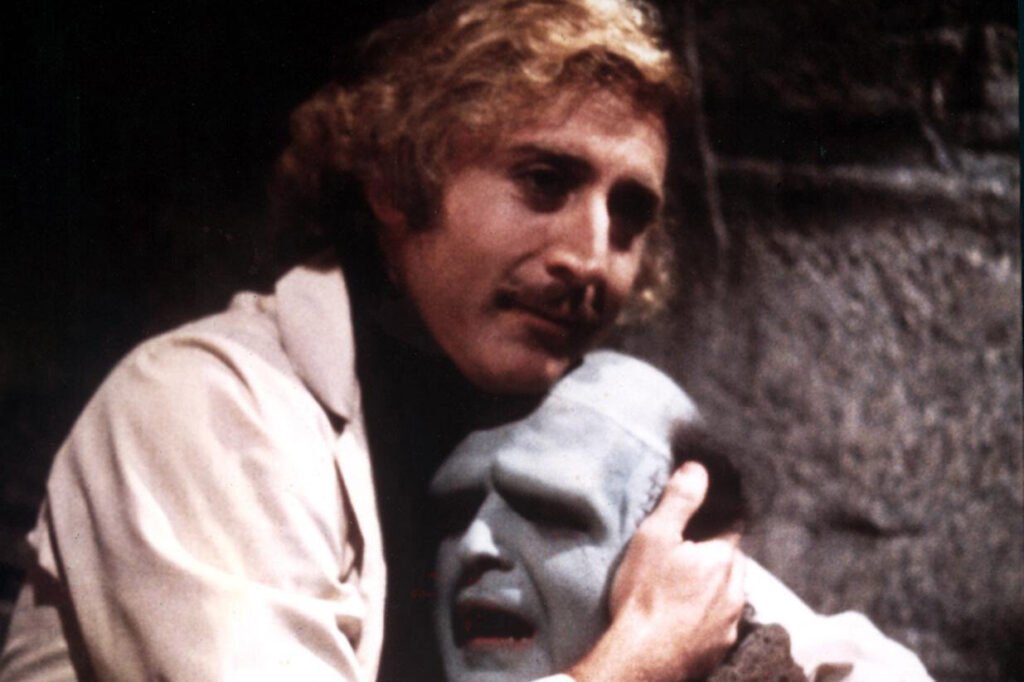
On paper, this line shouldn’t be as funny as it is. It’s a simple instruction, something you’d hear in any normal situation. But in Young Frankenstein, it becomes one of the film’s most memorable gags. Marty Feldman’s Igor says it, then immediately demonstrates with an exaggerated, hunched walk. The visual payoff is what makes the line unforgettable. It’s a perfect blend of dialogue and physical comedy.
What’s impressive is how quickly the joke lands and moves on. Brooks doesn’t linger on it or over-explain. He trusts the audience to get it instantly. That confidence is a hallmark of his work. The humor feels effortless, even though it’s carefully constructed. It’s also a reminder that Brooks wasn’t just about clever lines, he understood visual timing just as well. This moment proves it.
6. Spaceballs (1987), “We ain’t found… anything!”
This line comes from one of the film’s most quoted sequences, delivered by a pair of troopers searching the desert. The repetition is what makes it funny, each time they say it, the delivery gets more exaggerated. Brooks knew exactly how far to push a joke before it wore out its welcome. Here, he pushes it right to the edge. The pause between words becomes part of the humor. It’s not just what they say, it’s how they say it.
The scene itself is a parody of countless search sequences in sci-fi films. By reducing it to this repetitive line, Brooks strips away any sense of drama. What’s left is pure absurdity. It’s a small moment in the film, but it sticks with audiences long after. That’s the mark of a strong comedic beat. It doesn’t need to be complicated to be effective.
7. History of the World, Part I (1981), “It’s good to be the king.”
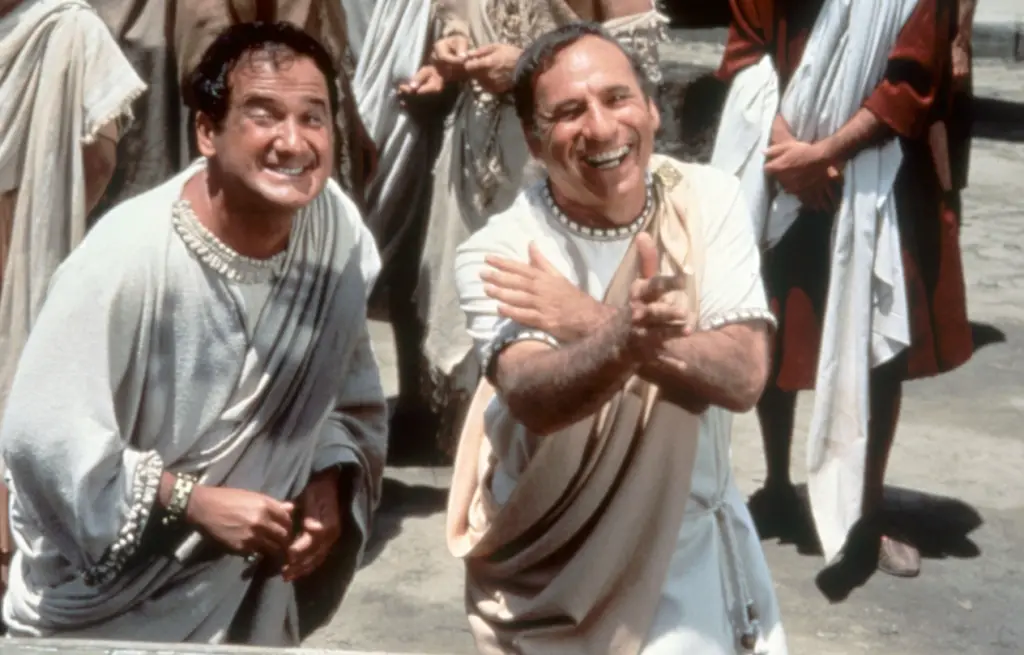
Mel Brooks delivers this line himself as King Louis XVI, and he repeats it multiple times throughout the film. Each repetition lands a little differently depending on the situation. Sometimes it’s smug, sometimes it’s almost self-aware. That variation keeps the joke fresh. Brooks understood the power of a running gag. When done right, it becomes something audiences look forward to.
The humor here is rooted in satire of monarchy and unchecked power. By reducing it all to a simple phrase, Brooks highlights the absurdity of it. It’s not subtle, but it doesn’t need to be. The line works because it’s so blunt. It captures an entire idea in just a few words. That efficiency is part of what makes Brooks’ comedy so enduring.
8. Robin Hood: Men in Tights (1993), “Unlike some other Robin Hoods, I can speak with an English accent.”
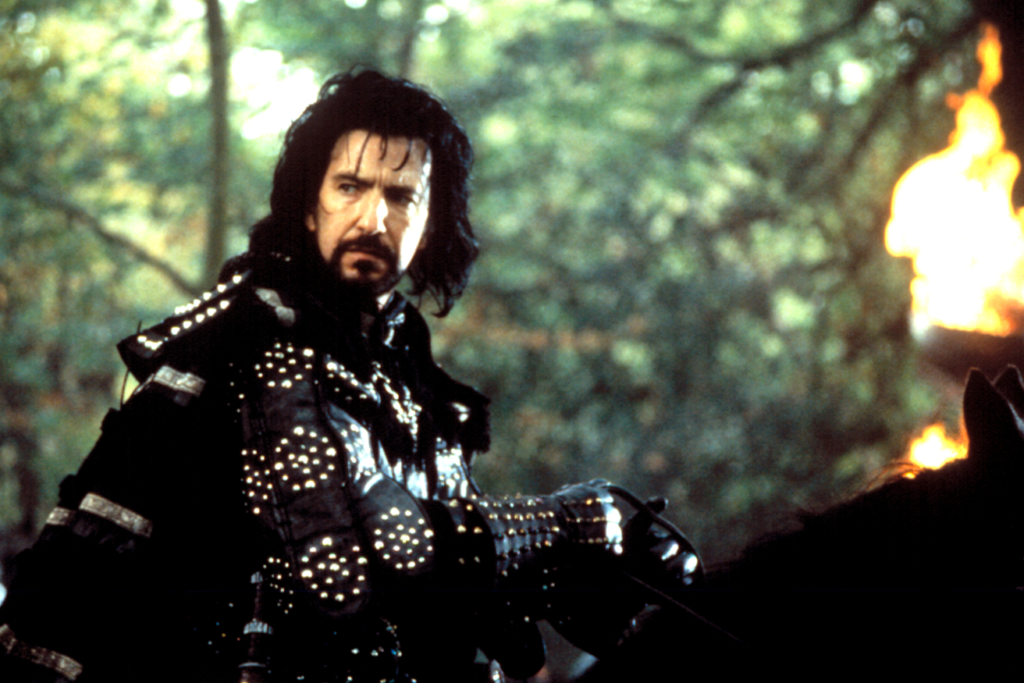
Cary Elwes delivers this line directly to the audience, breaking the fourth wall in classic Brooks fashion. It’s a jab at Kevin Costner’s performance in Robin Hood: Prince of Thieves (1991), where his accent was widely criticized. The joke lands because it’s so specific. Brooks wasn’t afraid to call out contemporary films directly. That immediacy gave his parodies an extra edge.
What makes the line work is Elwes’ delivery. He plays it casually, almost like an aside, which makes it feel even sharper. It’s a reminder that Brooks’ humor often depends on performance as much as writing. The line also shows how quickly parody can respond to pop culture. Even decades later, the joke still makes sense. That’s not always the case with topical humor, but here it holds up.
9. Blazing Saddles (1974), “Excuse me while I whip this out.”
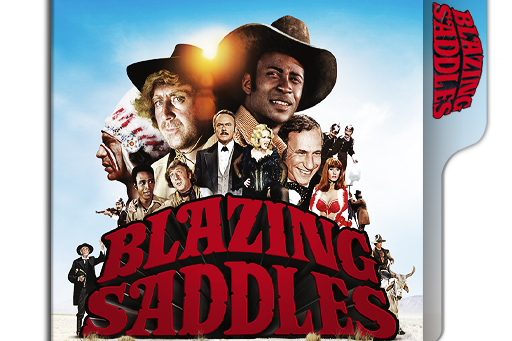
This line is delivered by Sheriff Bart in a moment that deliberately sets up one expectation and then subverts it. The audience anticipates something shocking, and Brooks leans into that anticipation. The reveal itself is harmless, which is exactly why it works. The joke lives in the misdirection. Brooks was a master of setting up and then flipping expectations.
The humor also reflects the film’s broader approach to taboo topics. Brooks constantly walks the line between offensive and satirical. This moment is a clear example of that balancing act. It’s risky, but it’s also carefully controlled. The payoff wouldn’t work without the setup. That precision is what separates Brooks from less disciplined comedians.
10. Young Frankenstein (1974), “Abby someone… Abby Normal.”
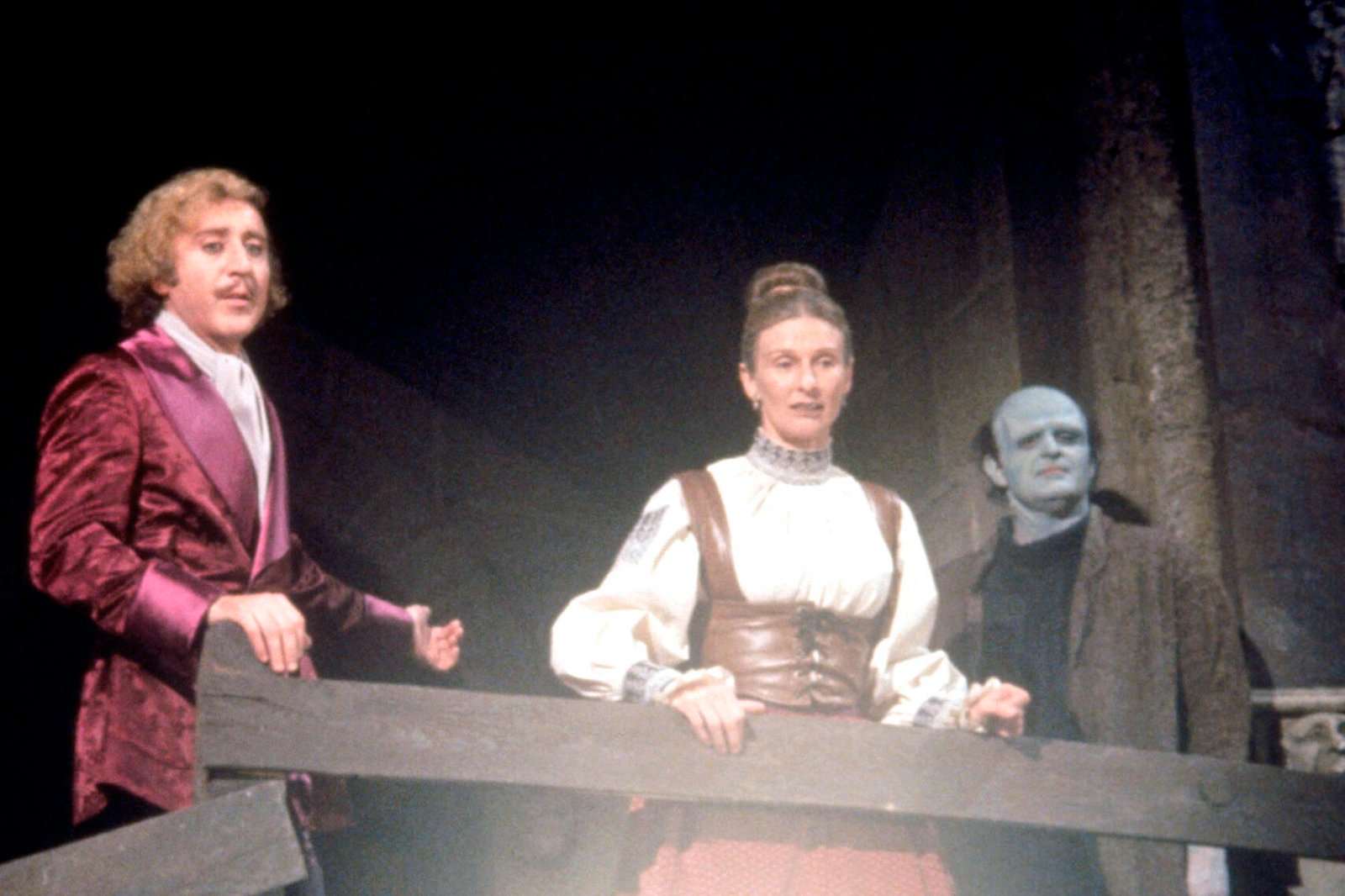
This exchange between Dr. Frankenstein and Igor is one of the film’s most beloved bits. The joke builds through confusion, with Igor casually revealing the source of the brain. The pause before “Abby Normal” is crucial. Without it, the punchline wouldn’t hit the same way. Brooks understood timing down to the smallest detail.
The humor here is rooted in wordplay, but it’s elevated by performance. Marty Feldman’s delivery is perfectly offbeat, making the line feel both silly and clever. It’s also a great example of how Brooks uses dialogue to advance the story while still getting a laugh. The scene isn’t just a gag, it matters to the plot. That dual purpose is part of what makes the film so effective.
11. Spaceballs (1987), “Ludicrous speed, go!”
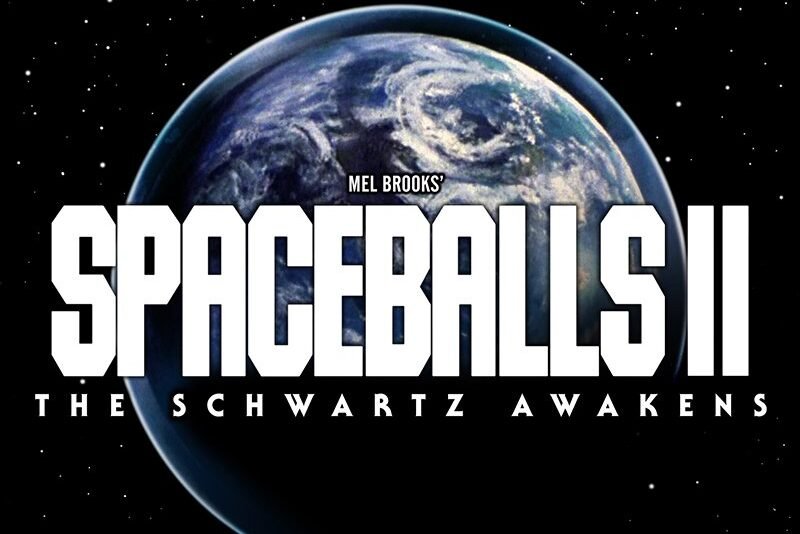
When Dark Helmet pushes the ship into “ludicrous speed,” the joke escalates beyond anything the audience expects. The concept itself is funny, but the execution makes it unforgettable. Everything stretches, distorts, and becomes completely absurd. Brooks takes a familiar sci-fi trope and pushes it to its logical extreme. That escalation is key to the humor.
The line itself is simple, but it sets up a much bigger visual gag. Brooks often used dialogue as a launching point for something more elaborate. This is a clear example of that technique. The joke doesn’t stop with the words, it expands into the entire scene. That layered approach keeps the comedy dynamic. It’s not just one punchline, it’s a sequence.
12. The Producers (1967), “Springtime for Hitler.”
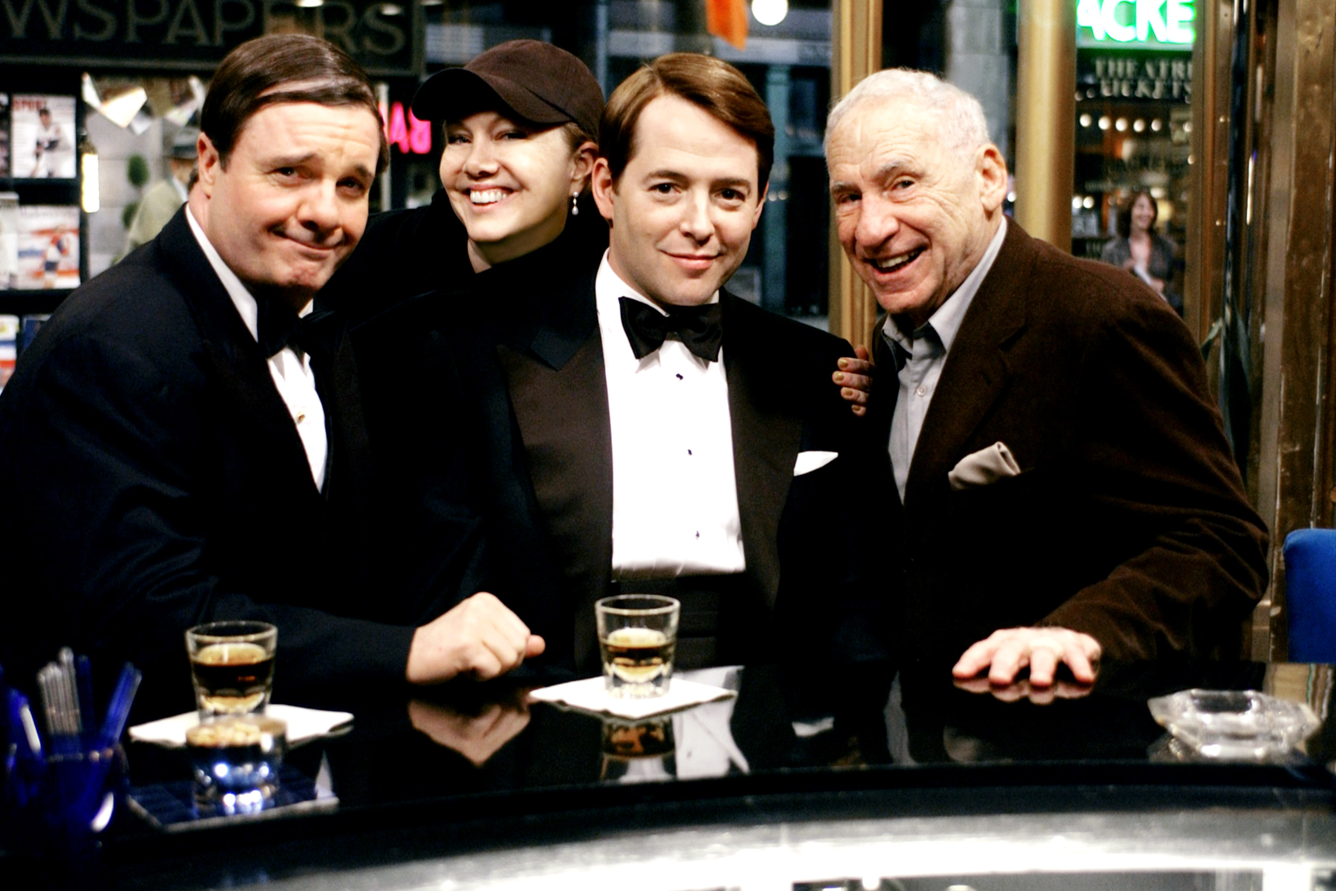
This line comes from the fictional musical within the film, and it’s intentionally outrageous. Brooks uses shock value, but not for its own sake. The absurdity of the concept is what makes it funny. By presenting something so inappropriate in such a cheerful way, he creates a sharp contrast. That contrast is where the humor lives.
The film itself is a satire of both show business and bad taste. This line encapsulates both themes perfectly. It’s uncomfortable, but that discomfort is part of the joke. Brooks wasn’t afraid to go places other filmmakers avoided. That willingness is what set him apart. Even today, the line stands out as one of his boldest comedic choices.